
Stirling Loss Assessors by PCLA
Thinking about making a home insurance claim?Speak to an independent loss assessor first.
Get clear independent advice before moving forward. We explain your options, assess the damage, and help you handle the claim properly from the start.
Request your free claim review today.
Remember, we handle the hassle, you keep the payout.
Get Help Today
Loss Assessors in Stirling. Independent Help with Your Home Insurance Claim
You have discovered property damage at home — a leak, a storm event, water coming through a ceiling, damage from a fire — and you are working out what to do next. You know an insurance claim is coming. You may have already spoken to your insurer, or you may not be sure whether you should before getting independent advice.
This page is written for the moment before the claim begins. Most homeowners in Stirling do not realise they can appoint their own expert at this stage — before meeting the insurer's loss adjuster, before any assessment is made, and before they commit to anything. That is what PCLA does. We are independent loss assessors. Our surveyors attend properties in Stirling, across Stirlingshire, and throughout central Scotland in person. Our job is to make sure your claim is properly prepared from the start.
Fair claims start here. Thinking about making a claim?
Speak to PCLA on 0141 461 2406.
What Is an Independent Loss Assessor?
Your insurer appoints a loss adjuster to assess your claim. Their role is to assess the claim for the insurer. They are not appointed to prepare your claim on your behalf or advocate for the highest fully evidenced settlement.
An independent loss assessor works the other way around. We are appointed by you, act exclusively for you, and our job is to ensure your claim is documented fully and presented in a way that reflects the true extent of your loss.
We are not adversarial. A well-prepared claim, submitted by a qualified surveyor with a full costed repair schedule and supporting technical evidence, is simply harder to dispute than a self-reported one.
The earlier you involve us, the more we can do. The best time to call is before you notify your insurer, or before you accept a settlement figure, while the evidence and the scope of the claim can still be shaped. A short call at that point costs nothing and does not commit you to anything.
What we do, in three steps
PCLA acts for the homeowner, not the insurer. Our work on a claim covers three things:
Assess the claim.
We attend your property, review the cause and extent of the damage, and look at the policy position. We tell you what the claim is likely to involve, what your policy covers, and where the points of difficulty are likely to be.
Evidence the damage.
We document the damage with photographs, moisture readings, and technical reports. Where hidden damage is suspected — under floors, behind plasterboard, within thick stone walls — we carry out moisture mapping and trace and access work to establish the true extent.
Negotiate the settlement.
We prepare and submit the claim, handle all correspondence with your insurer and any loss adjuster they appoint, respond to queries, and negotiate the settlement on your behalf.
You do not manage paperwork, meet the loss adjuster, or negotiate the figure. We handle that for you.
A Stirling escape of water claim — settled at £12,200
A homeowner in Stirling contacted PCLA after a leak from the feed pipe to an upstairs wash hand basin allowed water to escape into the property. The leak had not been visible for some time. By the time it was discovered, water had travelled beyond the bathroom — down through the floor structure and into the kitchen on the ground floor below.
The visible damage in any escape of water situation rarely reflects the full extent. Water travels through floor voids, ceiling cavities, and partition walls, often reaching adjoining rooms before any surface sign of damage appears. A claim assessed only on the visibly affected area at first inspection can miss the wider reinstatement needed.
We attended the property, surveyed the bathroom and the kitchen below for moisture, documented the damage with photographs and readings, and prepared a comprehensive schedule of works covering both rooms, the affected ceiling, decoration, and associated reinstatement.
The claim was settled at £12,200.
Case details shared with permission of the policyholder.
Find out how we help homeowners in Scotland with escape of water claims.
Ready to Start Your Claim?
Tell us what happened.
We’ll call you back within 30 minutes and explain what you’re entitled to under your policy.
No obligation. No upfront fee.
📞 Call our office on 0141 461 2406
You don’t need to deal with the insurer. That’s what we’re here for.
Why home insurance claims in Stirling can become complicated
Stirling has a genuinely mixed housing stock.
Historic stone properties in and around the Old Town and city centre sit alongside modern estate housing in areas such as Bannockburn, St Ninians, and Cambusbarron. The challenges that arise in a claim depend significantly on the type of property.
Older stone properties.
Traditional dressed stone, rubble masonry, slate roofs, lime mortar, and lime plaster all bring particular considerations. Drying a thick stone wall properly after a water event takes time. Reinstatement in a conservation area or listed property may need to use traditional materials and approved methods. A standard insurer-prepared schedule of works does not always reflect what reinstatement in this kind of property actually requires.
Conservation areas and listed buildings.
Stirling has an active conservation programme, including the Stirling Conservation Area Regeneration Scheme. Where repairs to a property affect a listed feature or sit within a conservation area, the materials and methods used can be restricted. This may affect the scope and cost of reinstatement, and is worth raising at the start of a claim.
Matching traditional materials.
Where damage affects part of a roof, a wall, or a floor finished in traditional materials, the question of whether the insurer should pay for a match across a wider area can be a point of difference. This applies to slate, stonework, traditional rendering, and original interior features.
Modern estate properties.
In newer estate homes, the issues are different. Escape of water from kitchens, bathrooms, appliances, and central heating systems is common across the housing market. Disputes more often turn on the scope of reinstatement — particularly around fitted kitchens, flooring, and matching of items where partial damage has occurred.
Storm damage.
Slate roofs, chimney stacks, and traditional flashings can be vulnerable to wind and driving rain. Storm damage claims often raise the question of whether damage was caused by a storm event or was pre-existing. Establishing the cause clearly with date-stamped evidence is important.
None of this means your insurer will act unfairly. It means that a properly prepared claim — with the right evidence, an accurate scope, and a clear policy position — is far easier to settle without dispute.
When to contact PCLA
Ideally before the loss adjuster visits.
Appointing PCLA early means we carry out our own inspection and survey before any assessment is made on behalf of your insurer. The evidence base for the claim is set at this point — early appointment gives the strongest foundation.
If your insurer has already inspected.
You can still appoint PCLA. A settlement offer is not final until you have accepted it. We can review the offer, carry out further investigation where needed, prepare an independently costed schedule of works, and negotiate before you make any decision.
If the claim is delayed, reduced, or refused.
If your claim is taking too long, the offer does not reflect the damage, or you have received a refusal on grounds such as gradual damage or wear and tear, contact us and we will review the position.
Call PCLA: 0141 461 2406.
No Win, No Fee
PCLA operates on a No Win, No Fee basis for loss assessing services. There is no upfront cost, and no fee is payable unless your claim is settled. Our fee is a percentage of the agreed settlement, confirmed in writing before any work begins.
There is no obligation from an initial call.
Loss Assessors and Loss Adjusters: What's the Difference?
Many homeowners in Stirling search for a "loss adjuster" when what they really need is a loss assessor. The terms are used interchangeably, but the distinction matters.
PCLA are loss assessors. We have no commercial relationship with any insurer. We are paid only when your claim settles, and only as a percentage of what you receive.
What Makes PCLA Different?
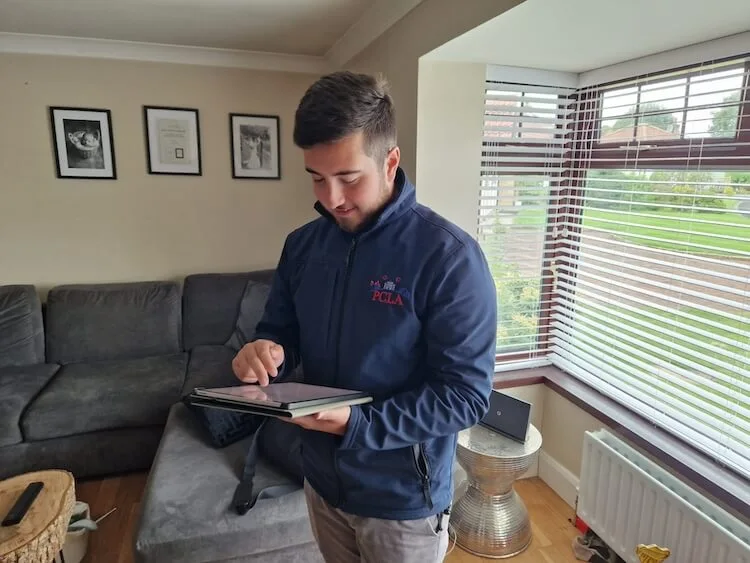
Claim types we handle in Stirling
PCLA handles the full range of home insurance claims in Stirling and across the wider region, including:
Whether your home is a stone-built town centre property or a modern estate home, we handle the claim from first inspection to final settlement.
Areas We Cover Around Stirling
We provide services across Stirling and its surrounding areas, ensuring comprehensive coverage for the following towns and villages:
Whether you're based in the heart of Stirling or in one of the picturesque surrounding villages, we’re here to assist you. Our team is dedicated to providing top-quality services tailored to your specific needs.
We're proud to be locally operated, ensuring that the assessor who visits your property is an experienced and knowledgeable PCLA employee.
Questions People Ask Before Getting Help With a Claim
Thinking about making a claim? Speak to PCLA first
If you have suffered property damage at home in Stirling and you are not sure what your claim involves, contact PCLA. We give homeowners their own expert before the insurance claim begins — assessing the claim, evidencing the damage, and negotiating the settlement, so the claim is properly prepared from the start.
Call: 0141 461 2406.
No Win, No Fee. No upfront cost. No obligation from an initial call.
For our wider Scotland service, see our Scotland loss assessor page →.
About PCLA
PCLA are Independent Loss Assessors and Claims Managers who work solely for you—the policyholder.
We help homeowners and business owners across Stirling deal with sudden damage, water leaks, fires, and insurance complications. If you’ve suffered loss or disruption, we take the pressure off.
With over 25 years’ experience and a team of qualified surveyors, we handle every stage of the claims process—assessment, paperwork, negotiation, and repair coordination—so you don’t have to.
We act on your behalf to secure the full settlement you're entitled to under your policy. No chasing calls. No second-guessing the process. Just clear, expert support from start to finish.
We make insurance claims easier, faster, and fairer.