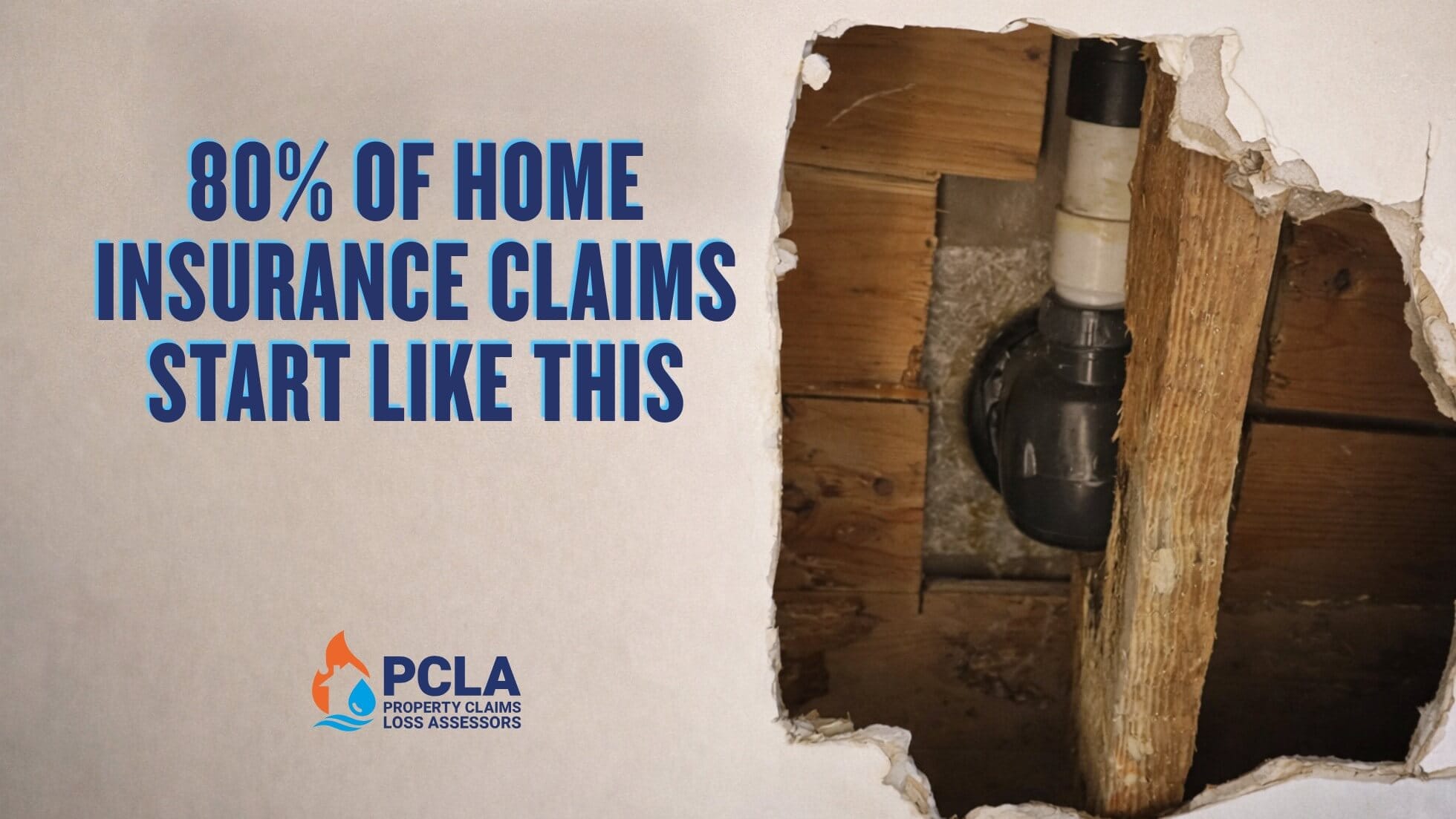
Water damage can look straightforward on the surface, but the settlement outcome often comes down to what’s documented and how completely the damage is scoped. Homeowners usually call it “water damage”; insurers often log internal leak-related claims as “escape of water.”
Either way, the aim is the same: present a clear, evidence-based insurance claim that reflects the full scope of repairs, including hidden and secondary damage.
If you’re a homeowner and you want advice on next steps, call PCLA.
What to do next (so your claim reflects the full damage)
At this stage, the biggest risk usually isn’t the initial water leak — it’s ending up with a scope that only covers what’s obvious. Your goal is to preserve evidence, keep a clear record, and avoid decisions that lock your water damage insurance claim into a shallow repair.
Do this next:
- Document before anything changes (as much as practical):
photos/video of affected rooms and the suspected source area. - Start a simple timeline:
when you noticed it, what you saw, what you did, who you spoke to. - Keep key damaged items/materials where practical until the insurer confirms what evidence they need.
- Separate “mitigation/drying” from “reinstatement” in your notes and receipts.
These are often treated differently within the claims process. - Ask your insurance company to confirm next steps in writing
(what they need, what they’ll inspect, and what approvals are required).
Have this ready when you contact your insurance provider:
- Claim reference (if you already have one);
- Date/time you discovered the water damage (and what you observed);
- Which rooms/areas are affected (list them).
If you want guidance on what to prioritise, call 028 9581 5318.
What to say to your insurer (scripts you can use)
The aim here is simple: communicate facts clearly, avoid guesswork, and get the insurer to confirm requirements in writing. This reduces delays and helps prevent misunderstandings later.
A quick note on home insurance policies: cover depends on your policy wording and the facts of what happened. Evidence and timeline matter, particularly where insurers are deciding whether damage was sudden/accidental versus gradual.
Phone script: claim notification (water damage / escape of water)
Use factual language. If you’re unsure of the exact cause, say so.
Then ask:
- “Can you confirm the claim reference number?”
- “How is the claim being categorised — for example as escape of water?”
- “What evidence do you need from me, and do you require photos before any drying or strip-out work?”
- “Will an inspection/visit be required, and if so, when?”
- “Are there any approvals required before mitigation, drying, or reinstatement work begins?”
- “Could you email me a summary of the next steps and what you need from me?”
Email template: confirm in writing
Homeowners who want help scoping and evidencing a water damage claim can call PCLA.
The Evidence Pack (the most useful part of your claim)
A strong water damage insurance claim is rarely supported by one photo and a short description. It’s supported by organised evidence that makes the scope obvious and defensible.
Use the checklists below to build your Evidence Pack.
A) Photo checklist (what to capture)
Aim for a mix of wide shots and close-ups.
- The suspected source area (even if uncertain);
- Wide shots of each affected room (all walls, floor, ceiling);
- Close-ups of staining, swelling, warping, lifting, cracking;
- Skirting/architraves/joinery where swelling is visible;
- Floor edges, thresholds, underlay exposure where visible;
- Kitchen/bathroom units and adjacent panels if impacted;
- Any visible damp lines or discolouration progression;
- Contents damage (furniture, soft furnishings, electronics);
- Any drying equipment in place (if used);
- Any access openings created (before/after photos).
Tip: Photograph in good light and include context so it’s clear where the image is taken.
B) Documents checklist (what to gather)
- Policy schedule (and policy wording if available);
- Claim reference and insurer correspondence;
- A room-by-room list of damaged building elements and contents;
- Receipts for damaged items (where available);
- Quotes/estimates (even if preliminary);
- Invoices for mitigation/drying (if applicable);
- Notes from any contractor visits (dates, observations);
- Your communication log (see template below).
C) Costs people often miss (include if applicable)
Policies vary, so keep language factual and evidence-led.
- Trace and access costs (locating the source and opening up);
- Drying and dehumidification (hire, monitoring, repeat visits);
- Strip-out and disposal of damaged materials;
- Plaster/skim replacement beyond a small patch area;
- Flooring underlay/subfloor treatment and edge replacement;
- Joinery replacement (skirting, architraves, thresholds, units)
Insulation replacement (where saturated); - Mould treatment where required (supported by evidence);
- Electrical inspection/testing where water exposure is possible;
- Decoration matching/blending where partial repairs cause mismatch.
D) Claim communication log (simple template)
Keep this as a running record.
- Date/time;
- Who you spoke to (name + role);
- Channel (phone/email);
- Summary of what was said;
- What they requested from you;
- What they agreed to do;
- Next action and date.
Hidden damage checklist (the part that changes settlements)
Visible water damage is often the smallest part of the true reinstatement cost. Water migrates, saturates materials, and creates secondary damage that can be missed if the claim is scoped too early or too narrowly.
Use this checklist to think through what may need to be inspected, evidenced, and costed.
Commonly under-scoped areas:
- Behind plaster/skim where damp migration is likely;
- Insulation in walls/loft spaces that can hold moisture;
- Subfloors and underlay where water tracks under flooring;
- Swollen joinery: skirting, architraves, door frames, thresholds;
- Concealed voids behind kitchen/bathroom units;
- Cabinet bases and plinths that absorb moisture;
- Wall/floor junctions where damp spreads beyond the visible patch;
- Mould risk where moisture remains trapped (evidence-led);
- Electrical components where exposure is possible (inspection/testing);
- The separation of drying/mitigation costs versus reinstatement costs.
If your claim feels like it’s being treated as “cosmetic repairs only,” it’s often because hidden damage hasn’t been properly identified, documented, and presented.
Homeowners can call PCLA to discuss how our water damage loss assessor service can help with scoping and evidence.
What happens next (typical claims process timeline)
Water damage insurance claims vary by insurer and policy, but most follow a similar process:
- Claim logged and basic information gathered;
- Evidence requests (photos, descriptions, sometimes inventory);
- Insurer inspection/visit (sometimes via a loss adjuster);
- Mitigation/drying and any required approvals
- Scope and costings for reinstatement (what needs repaired/replaced);
- Settlement agreement and payment.
The most common friction points happen at stages 4–6, where the scope is debated or reduced.
Mistakes that reduce settlements (and what to do instead)
Below are common issues that lead to under-scoping, delays, or reduced outcomes. Each has a practical fix.
- Accepting an early scope/offer before hidden damage is assessed.
Fix: ensure moisture impact and secondary damage are considered before agreeing scope. - Weak documentation (few photos, no timeline, no log).
Fix: build an Evidence Pack and keep a communication record from day one. - Discarding damaged materials too early.
Fix: keep key items where practical until evidence requirements are confirmed. - Mixing mitigation/drying costs with reinstatement costs.
Fix: separate them in your records; keep invoices and notes organised. - Assuming terminology or cause too confidently.
Fix: describe facts; confirm insurer categorisation in writing (escape of water, etc.). - Not getting next steps in writing.
Fix: send a follow-up email after calls, asking for written confirmation. - Understating secondary damage or focusing only on one room.
Fix: document affected areas methodically, room-by-room, including adjacent spaces. - Proceeding with reinstatement without clarity on approvals.
Fix: confirm what approvals are needed and what evidence the insurer requires.
Before you accept an offer (quick checklist)
- Has drying/mitigation been properly allowed for (where relevant)?
- Has hidden/secondary damage been scoped and evidenced?
- Does the scope reflect like-for-like reinstatement, not a minimal patch?
- Are the costings aligned to the actual repairs required in your home?
- Do you have written confirmation of what the settlement covers?
If you’re unsure on any of the above, it’s often worth getting support before agreeing the scope.
Water damage vs “escape of water” (why the wording matters)
This section is for accurate description, not prevention or maintenance advice.
Common sources include:
- Burst pipe or joint failure;
- Appliance leak (washing machine, dishwasher, fridge/freezer supply);
- Loft tank overflow or failure;
- Heating system leak;
- Bathroom/kitchen plumbing failure;
- Localised roof ingress affecting internal finishes (if relevant).
If you don’t know the exact source yet, say so and stick to observable facts.
When professional help is worth considering
Some homeowners can manage straightforward water damage insurance claims. Many run into problems when the damage is extensive, the scope is disputed, or hidden damage is likely.
Consider professional help if:
- The insurer’s initial position or settlement offer feels too low;
- The damage affects multiple rooms or key building elements;
- You suspect hidden damage (damp migration, insulation, subfloor);
- Drying/mitigation or secondary costs are being excluded or questioned;
- The claim is delayed or communication is unclear;
- You want someone to handle evidence, scope, and negotiation.
If you’re a homeowner and you want advice on next steps, call PCLA on 028 9581 5318.
Learn how we help with water damage claims.
FAQs
Is water damage covered by home insurance and how does this affect an insurance claim?
Most home insurance policies in the UK cover sudden escape of water events, including many burst pipe insurance claims. What usually decides the outcome is your specific insurance policies, coverage limits, and whether the insurer views the damage as sudden and accidental versus gradual (for example, long-term seepage or poor maintenance).
If you’re unsure how your policy applies, focus on two things early: (1) documenting what happened and when, and (2) proving the full extent of the damage, including anything hidden behind walls, flooring, or units. That’s where settlements often change.
If you want a clear view of what should be claimed and what it will cost to put your home back properly, call PCLA. We document the full scope, produce evidence and repair costs, and provide a claims management service to help your insurance claim move forward efficiently.
What is “trace and access” in the insurance claims process for water leak incidents?
Trace and access is cover that can apply when you need to locate the source of a water leak (for example, a burst pipe) and access it by lifting flooring or opening a wall. In many escape of water claims, insurers want clear evidence of the source and what was required to reach it before they agree repair costs.
To protect your claim, keep this evidence simple and structured: photos before and after access, notes on what was found, and receipts/invoices for any work carried out. Where needed, leak detection can help confirm the source quickly and reduce arguments later.
If you want this handled properly, PCLA can coordinate the right reporting and documentation so trace and access supports your insurance claim rather than becoming a dispute.
What evidence do I need to file a claim and support your claim effectively?
A strong insurance claim is built on clear evidence, not long explanations. At minimum, aim for:
- Dated photos and video of the damage (wide shots and close-ups);
- A room-by-room list of damage to buildings and contents insurance items;
- Receipts for any emergency repairs or temporary measures;
- Notes of who you spoke to at the insurer and what was agreed (a simple log);
- Any professional reports (for example, leak detection findings), if obtained.
If the cause is a burst pipe or confirmed water supply issue, record what you observed and when. If you don’t know the cause yet, avoid guessing — stick to facts and let evidence lead.
If you want confidence that nothing important is missed (especially hidden damage), call PCLA for guidance or for full scoping and claims management.
Why do insurance companies often reduce or delay water damage claims?
Delays and reductions usually come down to one of four things: unclear cause, missing documentation, disputes about the extent of the damage, or insurer concerns that the damage was gradual and avoidable. Add in coverage limits and different interpretations of what your insurance policies cover, and even a straightforward claim can slow down.
You can reduce friction by: notifying your insurance promptly, keeping a clean record of communications, and presenting evidence that supports the full scope of repairs (not just the visible patch).
If your claim is stalling, a claims management service or independent loss assessor can take over the documentation and negotiation so you’re not trying to argue scope and costs while also managing the disruption at home.
How long do insurance claims in the UK take when water damage occurs?
It depends on the size of the claim and how quickly the scope is agreed. A small house insurance for water leak claim can progress quickly, while larger escape of water claims involving drying, strip-out, multiple rooms, or contents insurance replacement can take weeks or months.
The biggest factor is how early the damage is properly assessed and evidenced. If the insurer under-scopes initially, everything slows down later.
If you want a faster, clearer route to settlement, an independent loss assessor can organise the evidence, quantify repair costs, and manage the process so decisions are made on a complete scope rather than a partial one.
What should I avoid doing during the claims management and filing an insurance claim process?
Avoid the common mistakes that create disputes later:
- Don’t throw away damaged items until they’ve been photographed and listed;
- Don’t agree a permanent scope of works before hidden damage has been assessed;
- Don’t make major repairs without clarity on what the insurer requires;
- Don’t delay notifying your insurer or responding to evidence requests;
- Don’t guess the cause if you’re uncertain — describe what you observed.
You should take reasonable steps to prevent further damage (for example, isolating the water supply and arranging necessary temporary measures), but keep everything documented. Photos, receipts, and a communication log are often what protect your position if the claim is questioned.
When should I consider a loss assessor or professional claims management service for my water leak claim?
Consider a loss assessor or professional claims management service when the claim is large, the scope is unclear, or the insurer’s position doesn’t reflect the full damage. Common triggers include:
- Multiple rooms affected or expensive reinstatement;
- Concerns about hidden damage (damp migration, insulation, subfloors, joinery);
- Disagreement about the cause or what’s covered;
- Delays, repeated evidence requests, or a low settlement offer;
- Complex repair costs and contents insurance losses.
A good claims management approach doesn’t just “chase the insurer.” It documents the loss properly, supports the claim with evidence, and negotiates settlement on a defensible scope.
How can I minimise damage and protect your home after a burst pipe?
If you’ve had a burst pipe, focus on practical, safe actions that protect both your home and your insurance claim:
- Isolate the water supply;
- Move valuables and protect unaffected areas;
- Take photos/video before anything is removed, where possible;
- Keep notes of timing, observations, and temporary steps taken;
- Keep receipts for any necessary emergency repairs or mitigation.
Then contact your insurer to start the insurance claims process. Your early documentation helps insurance companies assess what happened and reduces later disputes about timing, cause, and scope.
If you want advice on next steps (especially around hidden damage and scoping repairs), call PCLA.
What types of water damage and causes should policyholders be aware of when making a claim?
Insurers typically treat sudden and accidental water damage differently from long-term issues. Common causes that appear in claims include:
- Burst pipe incidents;
- Leaks from appliances and internal plumbing;
- Tank/overflow issues;
- Bathroom/kitchen failures;
- Localised roof ingress (depending on circumstances).
The key point for policyholders is not to become the investigator. Describe what you observed, document the damage, and let evidence and reports establish the cause where needed. That approach reduces the risk of inconsistent statements affecting your insurance coverage position.
How can I maximise your claim and get the best possible insurance payout for water damage?
The best way to “maximise your claim” is to make sure the claim reflects the true scope of reinstatement — including hidden and secondary damage — and that your evidence supports it.
Practical steps that help:
- Notify your insurance provider promptly and keep confirmations in writing;
- Build an evidence pack: photos, inventory, receipts, and a communication log;
- Separate mitigation/drying costs from reinstatement repair costs;
- Don’t accept an offer until the full extent of the damage is understood;
- Use professional reporting where it clarifies cause or scope (for example, leak detection).
If negotiations stall or the offer doesn’t cover the real cost of restoring your home, a claims management expert or loss assessor can represent the policyholder, present the evidence, and push for a fair outcome based on a documented scope rather than a superficial patch repair.
Prefer a takeaway version?
Get Your Free Guide: Burst Pipes and Leaks — How to Claim for Water Damage.
Water damage often hides bigger problems than you think. Our free guide explains:
- The first steps to take after a burst pipe or leak;
- What insurers don’t always tell you;
- Real case studies from local families who secured their full settlement!
Enter your details below to get instant access to your free guide today.
Over 240 homeowners rate us 5-stars for taking the stress out of their home insurance claims.