If your home has been damaged and you are facing an insurance claim, it is normal to feel unsure about what to do first, what matters most, and what can safely wait.
This guide explains the home insurance claim process in Northern Ireland, step by step, in plain language. It is designed to help you understand the order of events, avoid common mistakes, and know where to get additional support if things become unclear or difficult.
You do not need to understand everything at once. You only need to know the next sensible step.
Where Am I in the Claim Right Now?
Most home insurance claims follow a similar pattern. You may move back and forth between stages — that is normal.
- 1. Damage discovered Make the situation safe and record what you can.
- 2. Claim reported The insurer logs the claim and issues a reference number.
- 3. Inspection & assessment A loss adjuster or contractor may visit to assess the damage.
- 4. Scoping & quotes What needs fixing is defined and costs are considered.
- 5. Offer made The insurer proposes a settlement or repair route.
- 6. Resolution or review The claim is settled, clarified, or queried further.
Before You Call Your Insurer: Safety, Photos, and Notes
Before any formal claim is reported, there are a few actions that protect both your safety and your position later in the process.
1. Make the situation safe
Your insurer expects you to take reasonable steps to prevent further damage. This might include:
- Turning off the water or electricity if required;
- Isolating the source of a leak;
- Boarding up a broken window or roof opening.
Temporary measures are usually acceptable. Permanent repairs should normally wait.
2. Photograph and video the damage
Take clear photos and short videos before anything is moved or cleaned where possible. Focus on:
- The source of damage (if visible);
- Affected rooms or areas;
- Damaged contents as well as the building itself.
You do not need professional-quality images. Clear, well-lit phone photos are enough.
If the damage is water-related, you may find it helpful to refer later to a dedicated guide on documenting water damage, but at this stage a basic record is sufficient.
3. Make brief notes
Write down:
- When you first noticed the damage;
- What you believe caused it;
- Any immediate actions you took.
These notes help you stay consistent when speaking to your insurer later.
Step 1: Reporting the Claim
What to say, what not to guess, and what to get in writing
Once the situation is stable, you should report the claim to your insurer as soon as reasonably possible.
What to focus on during the call
- Describe what happened, not what you think the insurer should pay for;
- Stick to facts you are confident about;
- If you are unsure about the cause, say so.
Avoid speculation. It is acceptable to say, “We are not certain yet” or “This is our best understanding so far.”
Example call script (light guidance)
“We’ve had damage to our home that we believe is insured. The issue was discovered on [date]. The affected areas are [brief description]. We’ve taken temporary steps to prevent further damage.”
What to ask before the call ends
- Your claim reference number;
- Who your main point of contact is;
- Whether a loss adjuster or contractor will be appointed;
- What the insurer expects you to do next.
Ask for confirmation by email wherever possible.
For a deeper explanation of what typically happens after a claim is reported, you can refer to a separate guide on what to expect from your insurer. This guide keeps the focus on your actions and decisions.
Step 2: Dealing With Loss Adjusters and Contractors
After the claim is logged, the insurer may appoint a loss adjuster or send contractors to inspect the damage.
Understanding roles (briefly)
- A loss adjuster is appointed by the insurer to assess the claim on their behalf;
- Contractors may be used to inspect, quote, or carry out repairs.
You do not need to challenge these roles, but it is important to understand that they do not represent you.
If you want a clearer explanation of who represents whom, there is a separate role-definition guide that goes into this in more detail.
Practical tips for inspections
- Be present if possible;
- Walk them through all affected areas;
- Mention any damage that is not immediately visible;
- Keep your own notes of what was discussed.
Do not feel pressured to agree to scopes of work or settlement figures on the spot.
Helpful Questions That Keep Things Moving
Claims often slow down simply because no one is quite sure what happens next. These questions can help keep communication clear and avoid unnecessary pauses.
Step 3: Quotes, Scopes of Work, and Temporary Repairs
This stage often causes confusion because it feels technical, but the principle is simple: the insurer needs to understand what needs to be repaired and why.
Quotes and scopes
You may be asked to:
- Obtain quotes yourself, or;
- Review scopes prepared by insurer-appointed parties.
Check that:
- All damaged areas are included;
- Like-for-like materials and finishes are allowed for;
- Access costs, drying, and reinstatement are not separated unfairly.
If something looks incomplete, raise it early, in writing.
Temporary repairs
Temporary repairs are usually acceptable and sometimes encouraged. Keep:
- Receipts;
- Photos before and after the temporary work.
Avoid full reinstatement unless the insurer has confirmed approval.
Step 4: Reviewing Settlement Offers
When a settlement offer is made, it is not a final demand for acceptance. It is a proposal.
Before accepting, check:
- Does the amount reflect the full scope of damage?
- Are exclusions or deductions clearly explained?
- Are you being asked to cash-settle instead of repair, and do you understand the implications?
Many homeowners accept early offers simply to bring the process to an end. That is understandable, but it is worth pausing.
If you want structured guidance on evaluating an insurer’s first offer, there is a dedicated decision-support guide that explores this in depth. This guide keeps the focus on process awareness rather than negotiation strategy.
Step 5: What to Do If You Disagree With the Outcome
Disagreement does not mean conflict. It usually means evidence or scope is incomplete or interpreted differently.
Normal Friction vs Signs You Should Pause
Some delays and questions are a routine part of handling a home insurance claim. Others are worth slowing down for and clarifying. The difference is usually in the pattern, not a single event.
Noticing one item does not mean something is wrong. When several appear together, it is reasonable to pause and ask for clarity.
Sensible first steps
- Ask for a written explanation of the insurer’s position;
- Identify exactly what is in dispute (costs, cause, scope, or policy interpretation);
- Respond calmly and factually.
At this point, some homeowners choose to continue alone, while others seek professional support.
If your claim feels delayed, reduced, or stalled, it can help to review common warning signs in a separate problem-identification guide, rather than assuming something has gone wrong immediately.
Where a Loss Assessor Fits at Each Stage
A loss assessor can become involved at almost any point, including:
- Before a claim is submitted;
- After inspections but before settlement;
- When an offer is disputed or unclear.
Their role is to act for you, not the insurer, by assessing damage, compiling evidence, and managing communication.
This guide does not attempt to help you decide whether you need one. That decision is covered fully in a separate, dedicated guide that looks at value, complexity, and claim size. Here, it is enough to know that support is available if the process becomes difficult to manage alone.
Free Tools and Checklists for Northern Ireland Policyholders
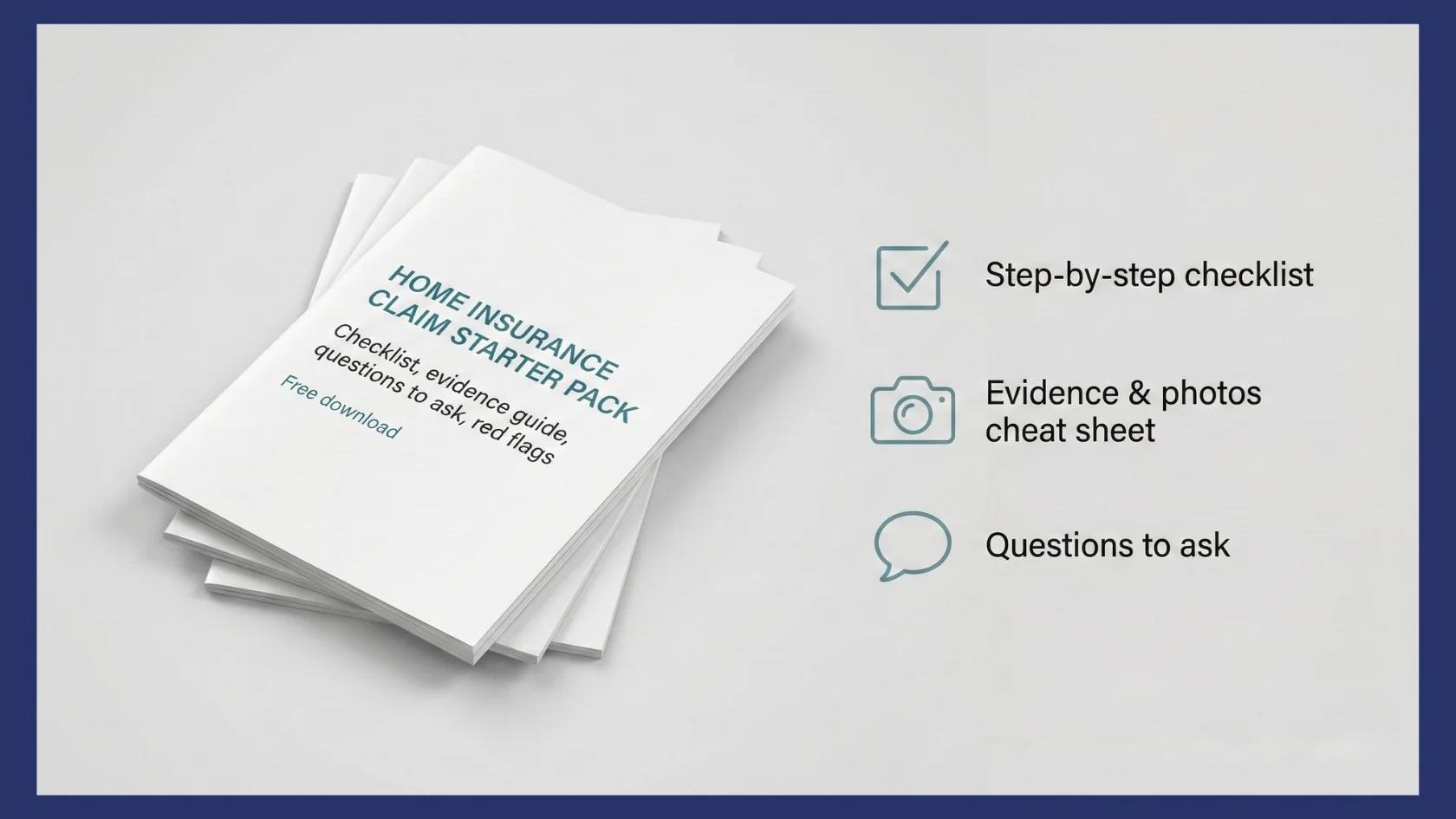
If you want more structured support alongside this guide, the NI Home Insurance Claim Starter Pack brings together:
- Stage-by-stage checklists
- Documentation templates
- Call and email scripts
- Practical reminders specific to Northern Ireland claims
The tools in this guide are intentionally light. The Starter Pack is designed to be the working companion you can refer back to as your claim progresses.
Learn More: Guides and Downloads
Final reassurance
Most home insurance claims in Northern Ireland do not fail because of one big mistake. They go off track due to small gaps in documentation, communication, or understanding.
If you take things step by step, keep records, and ask for clarity when something does not make sense, you put yourself in a far stronger position.
And if at any point the process feels unmanageable, getting independent, professional support is a reasonable option, not a last resort.