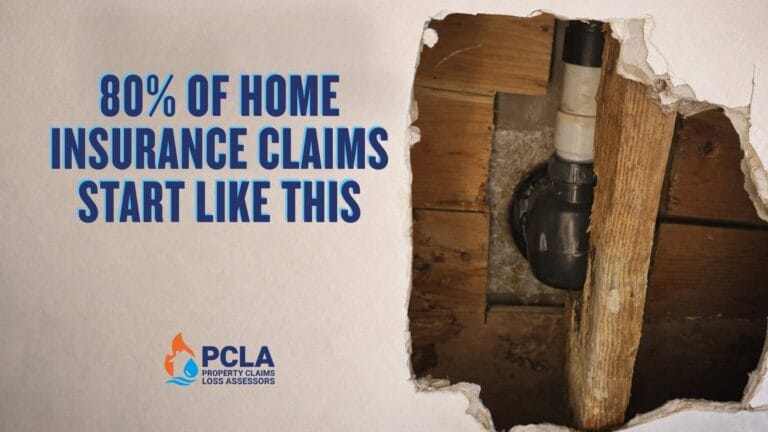
When people think about home insurance claims, the same risks usually come to mind: fires, floods, break-ins, or major storms. These are the events that make the news and naturally attract attention.
But after reviewing a full year of real insurance claims handled by our team, a different picture emerges.
In reality, the damage that most often affects homes is quieter, less dramatic, and far easier to overlook. Understanding that difference can make a significant impact on how well a claim progresses — and how much stress it causes along the way.
This article explains what actually drives home insurance claims, based on what we deal with every day at PCLA, and what that means for homeowners in practical terms.
How we looked at the data (and why it matters to homeowners)
Rather than relying on industry headlines or national statistics alone, we reviewed our own claims data from the past 12 months. These are real cases involving real homes across Northern Ireland.
By analysing the insured events that actually caused the damage, we were able to see clear patterns emerge. Not just which claims were most severe, but which ones were most common — and most misunderstood.
This matters because insurance claims are not just about what goes wrong. They’re about how clearly the cause of damage can be identified, evidenced, and explained under the terms of a policy.
What actually causes most home insurance claims
The quiet problems that account for the majority of damage.
When you strip away the rare and dramatic events, most claims fall into a small number of everyday categories. These are not the issues homeowners tend to worry about most, but they are the ones that consistently cause the greatest disruption.
The standout pattern is clear: everyday failures inside the home account for far more claims than external disasters. At the top of that list sits one peril in particular.
Escape of water: the biggest risk most homeowners underestimate
“Escape of water” is an insurance term that sounds technical, but it covers a very familiar set of problems.
It includes things like:
- Burst or leaking pipes;
- Failed plumbing joints;
- Leaking showers and baths;
- Appliance failures;
- Slow leaks from heating pipes hidden in floors or walls.
What makes escape of water claims so significant is not just how often they happen, but how they develop.
Many of the most serious cases we see did not start with a dramatic failure. They began quietly, behind walls or under floors, sometimes going unnoticed for weeks or months. By the time a stain appears on a ceiling or a floor starts to feel soft, the damage behind the scenes is often extensive.
These claims regularly involve:
- Damaged ceilings and floors;
- Weakened or rotting joists;
- Mould and damp issues;
- Large-scale strip-out and drying works.
Because the damage develops gradually, escape of water claims are also some of the most commonly disputed. Insurers will often focus closely on the cause, timing, and extent of the leak, which makes clear evidence and early guidance especially important.
Need clarity after water damage?
Water damage claims are rarely as straightforward as they first appear. If you have noticed signs of a leak — or your insurer has raised questions about the cause — early advice can make a significant difference.
Our independent loss assessors can:
- Review what has actually caused the damage;
- Explain how your policy is likely to respond;
- Advise on next steps before positions become fixed.
There’s no obligation and no pressure — just clear, practical guidance when it matters most.
Speak to a loss assessor for a free, no-obligation review of your situation.
Storm damage: when bad weather exposes hidden weaknesses
Storms remain an important cause of claims, but not always for the reasons people expect.
In many cases, the storm itself is not the sole cause of the damage. Instead, high winds and heavy rain expose existing weaknesses — loose tiles, deteriorated flashing, or compromised gutters — that may not have been obvious beforehand.
Typical storm-related claims involve:
- Roof tiles being dislodged;
- Water entering through damaged roofing or flashing;
- Gutters, fascias, and soffits being damaged;
- Impact from falling branches or debris.
Storm claims can become complicated when insurers argue that wear and tear or maintenance issues played a role. Understanding how the damage occurred — and being able to demonstrate the dominant cause — is often critical to achieving a fair outcome.
Why these claims are so often stressful and complicated
It’s not just the damage — it’s how the claim unfolds
Homeowners are often surprised by how complex a claim becomes, even when the damage seems obvious.
Common challenges include:
- Damage that was hidden before it became visible;
- Uncertainty over how long an issue has been developing;
- Disagreements about the cause of the damage;
- Policy wording that feels unclear or technical.
These issues are not about wrongdoing. They are about interpretation, evidence, and timing. How a claim is presented in the early stages often shapes how it progresses later.
What this means for homeowners in practical terms
How to think differently about risk and prevention
The biggest takeaway from our claims data is that serious damage often starts small.
That means:
- Paying attention to minor signs like staining, musty smells, or changes in flooring;
- Investigating issues early rather than waiting for them to worsen;
- Treating small leaks as potential insurance issues, not just maintenance problems.
By understanding where the real risks lie, homeowners can act sooner and with more confidence.
What to do if your home has already been damaged
If your home has suffered damage, uncertainty is completely normal. Many homeowners are unsure whether an issue is covered, how it should be described, or when to involve professional support.
What matters most is understanding:
- What actually caused the damage;
- How your policy defines and responds to that cause;
- What evidence may be needed to support the claim.
Early, independent advice can often prevent delays and misunderstandings later on.
Video: A full breakdown of the real drivers of home insurance claims
If you would prefer to watch a full explanation, the video below walks through our analysis in more detail, using real examples from the past year.
How PCLA supports homeowners through complex claims
PCLA are independent loss assessors. We work for homeowners, not insurers.
Our role is to:
- Clarify the cause and extent of damage;
- Interpret the policy on your behalf;
- Present claims clearly and professionally;
- Reduce stress by managing the process for you.
We focus on fairness, clarity, and outcomes — guiding homeowners through what can otherwise feel like an overwhelming process.
A final thought for homeowners
Most serious home insurance claims do not begin with dramatic events. They begin quietly, develop gradually, and only become obvious once significant damage has already occurred.
Understanding that reality puts you in a stronger position — both to protect your home and to navigate the claims process if something goes wrong.
If you’re unsure where you stand, a short conversation can often bring far more clarity than hours of online research.