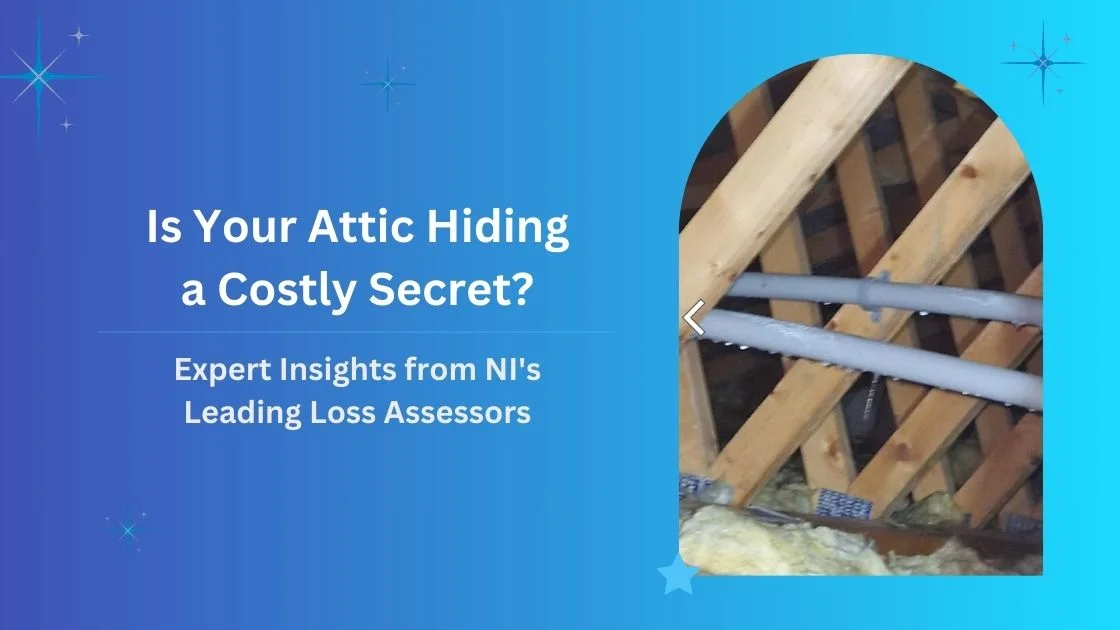
Your boiler keeps losing pressure, there is a damp patch spreading across the kitchen floor, and nobody can tell you where the water is coming from. Before anyone can repair the leak, somebody has to find it, and finding it can mean lifting floors, opening walls or cutting into a concrete slab.
Trace and access cover is the part of a home insurance policy that is meant to pay for that investigation work. It is one of the most misunderstood sections of a buildings policy, and it is one of the most commonly capped, reduced or refused. This guide explains what the cover typically includes, what is usually excluded, what the limits mean in practice, and what your options are if your insurer has refused or underpaid a trace and access claim.
What is trace and access cover?
Trace and access cover pays for the cost of locating the source of an escape of water and getting to it so that it can be repaired. It sits alongside the escape of water section of your policy rather than replacing it.
Trace and access cover typically pays for:
- The cost of a leak detection specialist to locate the source of the leak.
- The damage caused by the investigation itself, for example lifting a floor, excavating a slab, or opening a wall or ceiling.
- Reinstating the access opening once the leak has been repaired, including materials and labour.
Trace and access cover typically does not pay for:
- The repair of the pipe or fitting that failed.
- The water damage the leak has already caused to the building and its contents.
That second point matters more than any other, because it is where most disputes start. The damage the water has done is usually dealt with under the escape of water section of the policy, not the trace and access section, and the two have different limits. Where the loss is properly documented, those costs are often recoverable as part of an escape of water claim.
Does home insurance cover leak detection services?
In most cases some cover exists, but the extent of it varies between insurers and between policies with the same insurer. If your policy covers the cost of finding the leak, there will usually be a section headed trace and access, tracing and accessing, or something similar, in the policy booklet or on your schedule. Some policies place it inside a home emergency add-on rather than in the buildings section, which changes both the limit and the conditions attached to it.
How insurers handle leak detection costs
Insurers take different approaches, and the difference shows up in what actually gets paid.
Some will instruct their own leak detection contractor and settle that invoice directly. Some will ask you to arrange the investigation and reimburse the cost afterwards. Some will pay to repair the damage the leak caused but decline the cost of finding it, on the basis that the policy contains no trace and access section at all.
Two practical points follow from this. First, check whether your policy requires the insurer’s prior authorisation before a detection company attends, because a small number of policies do, and an unauthorised invoice is easier for an insurer to challenge. Second, keep everything: the leak detection report, moisture readings, photographs, invoices and any written correspondence. A trace and access cost that is properly evidenced at the time is far easier to recover than one reconstructed months later.
Are all leak detection services covered?
Not automatically. What tends to be accepted without much argument:
- Emergency response to control an active escape of water.
- Professional diagnostic work to locate a hidden leak, including acoustic tracing, thermal imaging, tracer gas and moisture mapping.
- The equipment and specialist time involved in that diagnostic work.
What tends to attract scrutiny: investigation carried out before the insurer was notified, work carried out by a contractor with no formal report to hand over, and any element the insurer considers to be repair or improvement rather than access. A professional leak detection survey that produces a written report with readings and images is the single most useful thing you can put in front of an insurer.
Trace and access limits: how much cover do you actually have?
Almost every policy that includes trace and access applies a limit, and the limit is where most shortfalls are created.
Typical limits. Caps commonly sit somewhere between £5,000 and £15,000, and some policies apply considerably less. A number of policies express the limit as a single figure for any one claim, so it is not renewed if a second leak occurs in the same policy year. Because wordings vary so widely, the only reliable figure is the one on your own schedule.
What happens when the cap is exceeded. A straightforward leak under a suspended timber floor may cost well under the limit to investigate. A leak in a pipe buried in a solid concrete slab is a different proposition: thermal and acoustic investigation, removal of fitted units and floor finishes, and controlled excavation of the slab can take the cost past the cap on its own. Where that happens the insurer will usually pay up to the limit and leave the balance with the policyholder.
The cap on trace and access is not a cap on your whole claim. This is the distinction that most often goes unchallenged and it can be worth a great deal. The trace and access limit applies to the work of locating and reaching the leak. It should not, in most wordings, be used to cap the drying, repair and reinstatement made necessary by the water itself, because that is resultant damage under the escape of water section, which carries its own much larger limit. Where an insurer allocates drying and reinstatement into the trace and access section and then applies the trace and access cap to all of it, the effect is a substantially reduced settlement. Whether that allocation is correct depends entirely on the policy wording, and it is worth having the wording read carefully before the figure is accepted.
Buried and under-floor leaks are the scenario where this arises most often. Our guide on how leaking copper pipes in concrete floors are located explains why the investigation work is so much more involved in these cases.
If your trace and access claim has been refused or underpaid
A refused or reduced trace and access claim is not necessarily the end of the matter. Insurers refuse these costs for a limited number of recognisable reasons, and each of them can be answered with evidence where the facts and the policy wording support it.
The reasons insurers give, and what answers them
1. “The policy limit has been reached.”
Establish first what has actually been charged to the limit. If drying, repair and reinstatement of resultant damage have been allocated to the trace and access section, the allocation itself can be challenged before the limit is ever argued about. A cost breakdown that separates access work from resultant damage, line by line, is what makes this possible.
2. “The investigation was not necessary, or a cheaper method would have found it.”
This is answered with the detection company’s methodology: what was tried, in what order, and why a less invasive method was ruled out. A report that shows escalation from non-invasive methods to excavation is considerably harder to dispute than an invoice with no narrative behind it.
3. “We do not accept the detection report or its findings.”
Where the insurer’s loss adjuster disputes the methodology or the conclusion, the answer is usually technical rather than argumentative: moisture readings taken at identified points, thermal images, tracer gas results, photographs before and after opening up, and confirmation of what was found when the floor or wall was opened. Evidence that the pipe was in fact found where the report predicted is difficult to argue with.
4. “This is water ingress, not escape of water.”
Trace and access sits with the escape of water peril. Water entering the building from outside, for example through a defective roof or as surface flooding, is a different peril and is not usually a trace and access matter. Where the source is genuinely internal, the detection report should say so explicitly.
5. “There is no insurable event.”
Insurers sometimes take this position where damage is limited or where the cause looks like wear or gradual deterioration rather than a sudden failure. Evidence of when the problem was first noticed, when it was reported, and what the detection engineer found at the pipe is central here.
6. “The wording excludes it.”
Some policies apply exclusions or sub-limits that genuinely do leave a shortfall. Not every refusal can be overturned, and it is better to know that early than to spend months on it. The insurer makes the final decision on policy cover.
If the insurer will not move
If your insurer has issued its final response and you do not accept it, you can refer the complaint to the Financial Ombudsman Service, free of charge, generally within six months of that final response. The Ombudsman can consider both the policy wording and whether the claim has been handled fairly, and a decision in your favour is binding on the insurer. It is worth referring a complaint with the detection report, the cost breakdown and the correspondence already assembled, rather than assembling them afterwards.
The most useful point to intervene, though, is earlier: before you accept a settlement figure. Once a figure has been accepted, the room to revisit how the costs were allocated narrows considerably.
Case study: buried pipe under a concrete floor, Lisburn
Lisburn, Northern Ireland. 2025. Escape of water and trace and access.
The homeowner noticed the boiler repeatedly losing pressure with no visible leak anywhere in the property. Moisture readings later identified elevated moisture beneath the tiled kitchen and the adjoining utility room.
Specialist leak detection traced the problem to a central heating pipe leaking inside the solid concrete floor. Reaching it required thermal and acoustic investigation, removal of the fitted units and floor finishes, and controlled excavation through the concrete slab. The trace and access cost came to £8,240, covering the specialist investigation, moisture mapping, removal of the finishes needed to reach the pipe, excavation of the floor, and making good the access opening after the repair.
The insurer’s initial position. The insurer accepted that trace and access cover applied, but pointed to a £5,000 trace and access limit in the policy. It treated the investigation, the excavation, the removal of the tiled floor and fitted units, the drying and the reinstatement of the affected floor as trace and access costs, offered the £5,000 maximum, and declined the balance.
What PCLA did. We reviewed the policy wording and separated the costs into two distinct parts: the reasonable cost of locating and accessing the leaking pipe, and the resultant water damage and reinstatement required because moisture had spread beneath the floor finishes and the fitted units. Our position was that the trace and access limit could properly apply to the investigation and access work, but should not be used to cap all of the repairs arising from an insured escape of water. A detailed scope, the leak detection report, the moisture readings and a line by line cost breakdown were submitted to show which items were access and which were resultant damage.
Outcome. The trace and access limit itself was not increased. The insurer paid the £5,000 cap under the trace and access section, and then accepted that the remaining £3,240 of access costs, together with £12,680 of drying and reinstatement, were resultant damage recoverable under the escape of water section, which carries its own separate limit. Final agreed settlement: £20,920. That allowed the homeowner to repair the buried pipe, dry the affected floor construction and reinstate the kitchen and utility room.
The cap was never the obstacle it appeared to be. What changed the outcome was establishing which costs belonged under which section of the policy.
Every claim turns on its own policy wording and its own facts, and we cannot promise a particular figure on any claim.
What does trace and access cost?
Where a leak is concealed behind walls, under floors or inside a slab, the investigation is both expensive and disruptive, which is exactly why the cover exists. Costs vary with the construction of the property, the location of the pipe and the methods needed to reach it, and a specialist survey is usually cheaper in the end than opening up a floor speculatively. Our guide to what leak detection costs in the UK covers the ranges in more detail, and the important point is that where the leak is an insured escape of water, you may not be meeting that cost yourself.
Is trace and access standard on home insurance?
Not always. Most home buildings policies now include some form of trace and access cover, but inclusion is not universal and the limits differ sharply between policies. Check your schedule for the section and the figure attached to it, and check whether it sits in the buildings section or inside a home emergency add-on, because that affects both the limit and the conditions. If you are not sure what your policy provides, we are happy to look at the wording with you.
Is trace and access the same as leak detection?
No. Leak detection is the service that finds the leak. Trace and access is the section of your insurance policy that may pay for it. You can have a leak detection survey with no trace and access cover, in which case you meet the cost yourself, and you can have trace and access cover in a policy without ever needing it.
What to do if you think you have a hidden leak
- Turn off the water supply, or the heating system where the pressure loss points there, to limit further damage.
- Photograph and note what you can see: damp patches, staining, lifting floor finishes, a musty smell, unexplained pressure loss or an unexplained rise in water use.
- Notify your insurer promptly and ask specifically whether your policy includes trace and access, and what the limit is.
- Arrange a professional leak detection survey and make sure you receive a written report with readings and images, not just an invoice.
- Keep every invoice, report and item of correspondence in one place.
- Speak to us before you accept any settlement figure.
Northern Ireland. PCLA is based in Belfast and works across Northern Ireland, with our own leak detection engineers. Call 028 9581 5318.
Scotland. We act for policyholders across Glasgow, Edinburgh, Kilmarnock, Motherwell and Stirling. Call 0141 461 2406.
Frequently asked questions
Does trace and access cover the repair of the leaking pipe?
Usually not. Trace and access covers finding the leak and getting to it, and putting back what had to be removed to reach it. The repair of the failed pipe or fitting is normally a separate matter, and the damage the water caused is dealt with under the escape of water section of the policy.
What is a typical trace and access limit?
Limits commonly fall between £5,000 and £15,000, though some policies apply less and a few considerably more. The only figure that matters is the one on your own schedule, and it is worth checking whether it applies per claim or per policy year.
My insurer says the trace and access limit caps my whole claim. Is that right?
It depends on the wording. In many policies the trace and access limit applies to the investigation and access work, while the drying, repair and reinstatement of the damage the water caused fall under the escape of water section with its own limit. Where those costs have all been allocated to the trace and access section, that allocation is worth examining before the figure is accepted.
Can I challenge a refused trace and access claim?
Often, yes, where the policy wording and the evidence support it. The material that makes the difference is the detection report with its methodology and readings, a cost breakdown that separates access from resultant damage, and the correspondence trail. If your insurer issues a final response you do not accept, you can refer the matter to the Financial Ombudsman Service free of charge, generally within six months.
Does trace and access cover leaks in a concrete floor?
It can, and this is the scenario where the limit is most often exceeded, because reaching a pipe inside a slab involves excavation as well as investigation. The cover applying and the cost falling within the limit are two different questions.
Does trace and access apply to water coming in from outside?
Generally no. Trace and access is tied to escape of water, meaning water escaping from the property’s own pipes, heating system, appliances or fixtures. Water entering from outside is a different peril and is usually handled elsewhere in the policy.
Should I get the leak found before I contact my insurer?
Contact your insurer promptly, and check whether the policy requires their authorisation before a detection company attends, because a small number of policies do. Speaking to us before you notify is often the most useful thing you can do, because the scope of the claim is easiest to shape at the start.
When to speak to PCLA
PCLA are independent loss assessors. We act solely for policyholders, not for insurers. That is the difference between an assessor and the loss adjuster your insurer appoints: the adjuster is instructed by the insurer to assess the claim on its behalf, while we are instructed by you to act on yours.
On a trace and access claim we assess the damage, evidence the claim, manage the process and negotiate the settlement, including how the costs are properly allocated between the trace and access section and the escape of water section.
The earlier you involve us, the more we can do. The best time to call is before you notify your insurer, or before you accept a settlement figure, while the evidence and the scope of the claim can still be shaped. A short call at that point costs nothing and does not commit you to anything.
PCLA explains its fee and terms clearly before appointment. Our fees are 10% of the final settlement + VAT.
Northern Ireland: 028 9581 5318 · Scotland: 0141 461 2406