
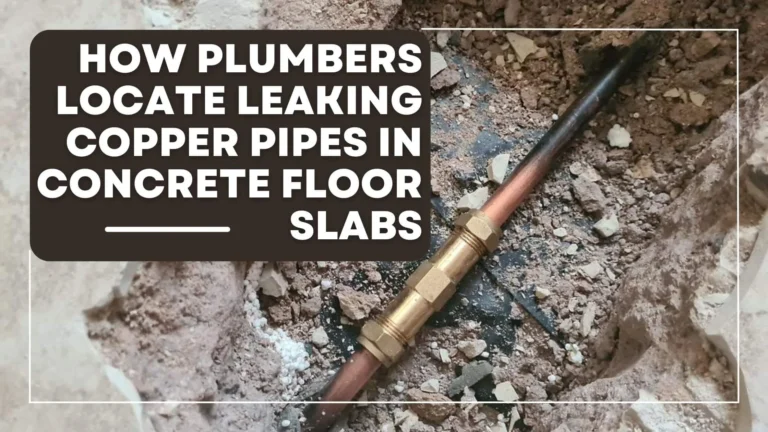
A water leak in a concrete slab floor can be difficult to detect and expensive if left untreated. Because the pipes are hidden, signs often appear slowly: rising bills, damp floors, or warm spots underfoot. This guide explains how plumbers locate leaks under concrete floors using non-destructive detection methods.
When it comes to domestic plumbing in the UK, one of the most challenging tasks plumbers face is locating leaking copper pipes embedded within concrete floor slabs. Leaks in these hidden systems can cause significant damage, leading to expensive repairs if not identified and resolved quickly. Traditionally, plumbers have employed specific methods and tools to locate these leaks, using a combination of experience and technology.
However, with advancements in modern techniques, the traditional approach is often considered outdated. In this post, we’ll explore the traditional methods plumbers have used for leak detection, the equipment involved, their advantages and disadvantages, and why more advanced methods have begun to replace them.
Key Takeaways
- Traditional methods of leak detection rely on visual inspection, sound detection, and manual excavation but are invasive and time-consuming.
- Modern techniques like acoustic detection, thermal imaging, and tracer gas detection offer non-invasive, accurate solutions but require specialised equipment.
- Choosing the right method depends on factors like the type of leak, the age of the property, and the available technology.
How can you tell if a pipe under the floor is leaking?
Typical signs include an unexplained rise in your water bill, a warm patch on the floor if the leaking pipe is part of the central heating system, a damp or musty smell with no obvious source, the sound of running water when every tap in the house is off, and staining on skirting boards or nearby walls. A simple check is to note your water meter reading, turn off every tap and appliance, then check the meter again after an hour. If it has moved, water is running somewhere.
What is the Traditional Plumber Approach to Leak Detection?
The traditional approach to detecting leaks in copper pipes buried in concrete floor slabs involves a combination of observation, manual testing, and invasive techniques. Historically, plumbers relied heavily on signs of leakage, physical clues, and simple yet effective tools to locate where a pipe had failed.

The basic process usually involves:
- Visual Inspection: Identifying damp spots, water pooling, or wet areas on walls and floors.
- Listening for Sounds: Using manual techniques or basic tools to detect the sound of running or dripping water.
- Pressure Testing: Turning off the water supply and using air pressure to check for drops in the pressure, indicating a leak.
- Concrete Drilling and Excavation: Once the general area of the leak is suspected, the concrete slab is drilled and manually excavated to expose the damaged pipe.
Though these methods can be effective, they are labour-intensive and often involve significant damage to the surrounding infrastructure, making the repair more disruptive and costly.
Equipment Needed for Traditional Leak Detection
Visual Indicators and Manual Tools
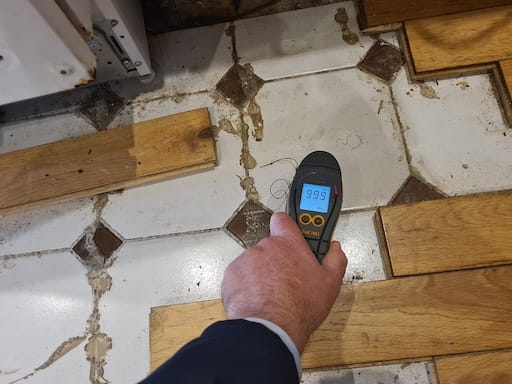
- Moisture Meters: A basic tool used to check for areas of increased moisture in the concrete slab or surrounding floor.
- Stethoscopes or Listening Devices: In cases where a leak creates a noticeable sound, plumbers use simple or more advanced stethoscope-like devices to pinpoint the source of dripping or hissing water.
- Pressure Testing Equipment: A set of gauges and pressure relief valves is employed to pressurise the system and monitor any drops, indicating the presence of a leak.
Drilling and Excavation Tools
- Rotary Hammer Drill: Once the general area of the leak is suspected, plumbers use a hammer drill to break through the concrete slab.
- Concrete Saw: In some cases, larger sections of the concrete need to be removed, so a concrete saw is necessary for cutting through thicker slabs.
- Hand Tools: Various chisels, hammers, and shovels are used to carefully excavate the area once the concrete has been broken up.
Plumbing Repair Tools
- Soldering Kit: If the leak is found in a copper pipe, the plumber will often repair it using soldering techniques.
- Pipe Cutters: To replace damaged sections of pipe, pipe cutters are essential for making clean, accurate cuts.
PCLA’s Leak Detection Service can find leaks in both residential and commercial properties.
When is the Traditional Method Best Used?
The traditional approach is best suited to older properties with known copper pipe systems, especially in cases where the homeowner or plumber has a reasonable understanding of the pipe layout. It may also be appropriate in cases where advanced technology is not readily available or where simpler methods are preferred for economic reasons.
- Best suited for:
- Older properties with known plumbing schematics.
- Small, isolated leaks that are relatively easy to access.
- Rural or remote areas where modern tools and technology may not be available.
However, there are significant drawbacks to using this approach, especially in large, complex systems where the exact layout of the plumbing is unknown or in cases where concrete slabs are thick and difficult to remove.
Advantages and Disadvantages of the Traditional Method
| Advantages | Disadvantages |
|---|---|
| Lower initial cost | Highly invasive |
| Simplicity of tools | Time-consuming |
| Suitable for small, isolated leaks | Risk of misdiagnosis |
| Minimal reliance on technology | Significant disruption to the property |
Advantages
- Lower Initial Cost: Traditional methods often require fewer specialised tools, making them more affordable in terms of upfront costs.
- Simplicity: With fewer moving parts and less reliance on technology, the traditional approach is more straightforward and can be carried out with basic plumbing knowledge.
- Useful for Small Leaks: In cases where the leak is small and located near the surface, this method can be quicker and effective.
Disadvantages
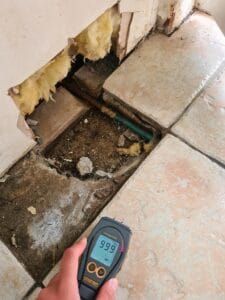
- Invasiveness: One of the biggest drawbacks of this method is that it involves physically breaking through the concrete slab, which can lead to further damage and costly repairs to the flooring and surrounding areas.
- Time-Consuming: Manually detecting a leak can take a significant amount of time, particularly if the leak is located deep within the slab or far from obvious water damage.
- Potential for Misdiagnosis: Without modern diagnostic tools, it is easier to misidentify the location of a leak, resulting in unnecessary drilling and excavation.
Disruption to the Household: Breaking through a concrete slab is noisy, messy, and inconvenient for the residents, and repairing the slab afterward can take days or weeks, depending on the extent of the damage.
Why More Modern Methods Have Superseded Traditional Approaches
Limitations of Traditional Leak Detection
Over the years, the traditional method of locating leaks in copper pipes has been increasingly replaced by more efficient and less invasive techniques. The primary reason for this shift is the significant drawbacks associated with manual excavation and concrete drilling. While these methods can work, they are labour-intensive, costly, and disruptive to homeowners.
Additionally, copper pipes themselves are less commonly used in modern construction, with more reliable materials like plastic (PEX) taking their place. Copper can corrode over time, leading to pinhole leaks, which are particularly hard to detect with traditional methods.
Did you know that “trace and access” cover might pay for leak detection?
Our guide sets out what this cover usually pays for, where limits may apply, and how it influences the cost of finding and accessing a leak before repairs can begin.
Newer Methods of Leak Detection
Several modern techniques have been developed to overcome the shortcomings of the traditional approach. These methods use advanced technology to detect leaks with greater precision and less disruption to the property.
| Method | Advantages | Disadvantages |
|---|---|---|
| Traditional Approach | Simple, low-cost, minimal technology | Invasive, time-consuming, risk of misdiagnosis |
| Acoustic Detection | Non-invasive, highly accurate | Expensive equipment, requires training |
| Thermal Imaging | Non-invasive, visual confirmation, fast | Limited to hot water leaks, costly |
| Tracer Gas Detection | Highly sensitive, non-invasive | Requires specialised equipment, may be unnecessary for large leaks |
1. Acoustic Leak Detection
Acoustic leak detection uses sensitive microphones and acoustic sensors to “listen” for the sound of leaking water. These devices can be finely tuned to filter out ambient noise and detect even the faintest hissing or dripping sounds. This method allows plumbers to pinpoint the location of a leak without having to break through the concrete slab.
Advantages of Acoustic Leak Detection
- Non-invasive: No need for drilling or excavation until the leak is precisely located.
- Highly Accurate: Advanced acoustic sensors can detect even small leaks deep within the concrete.
- Quick Diagnosis: This method significantly reduces the time it takes to locate the leak.
Disadvantages of Acoustic Leak Detection
- Equipment Costs: The equipment required can be expensive, leading to higher costs for homeowners.
- Training Required: Not all plumbers are trained to use this technology, which limits its availability in some areas.
2. Thermal Imaging
Thermal imaging cameras detect temperature changes in the floor slab, allowing plumbers to locate the source of a leak based on the heat signature of the water. This is particularly useful for hot water leaks, where the escaping water creates a distinct heat pattern that can be detected through the concrete.
Advantages of Thermal Imaging
- Non-invasive: Detects leaks without the need for physical damage to the floor slab.
- Visual Confirmation: The plumber can see exactly where the water is flowing, providing a clear indication of the leak location.
- Quick and Effective: Thermal imaging is fast and highly effective, especially for hot water leaks.
Disadvantages of Thermal Imaging
- Limited to Hot Water Systems: Thermal imaging is less effective for cold water leaks, as they do not create a noticeable heat signature.
- Expensive Equipment: Like acoustic detection, the equipment required is costly and not always available to all plumbing services.
3. Tracer Gas Detection
Tracer gas detection involves injecting a non-toxic gas into the plumbing system and using sensitive detectors to identify where the gas is escaping. Since gas molecules can pass through small cracks and imperfections, this method is highly effective for locating even the smallest leaks.
Advantages of Tracer Gas Detection
- Highly Sensitive: Can detect even the smallest leaks, making it one of the most accurate methods available.
- Non-invasive: No need to break through the concrete slab unless a leak is found.
Disadvantages of Tracer Gas Detection
- Requires Specialised Equipment: As with other modern methods, the equipment needed is expensive and requires training to use effectively.
- Not Always Necessary: Tracer gas detection may be overkill for larger, more obvious leaks that can be located using simpler methods.
Conclusion
While the traditional plumber approach to locating leaking copper pipes in concrete floor slabs has been effective in many cases, it comes with a host of disadvantages, particularly the invasiveness of concrete drilling and the potential for unnecessary damage. Over time, advancements in technology have led to the development of more efficient, non-invasive methods such as acoustic leak detection, thermal imaging, and tracer gas detection. These methods not only improve the accuracy of leak detection but also reduce the time and cost involved in repairs.
In the UK, as in many parts of the world, these modern methods have begun to replace traditional approaches. However, there is still a place for simpler methods in certain situations, especially where leaks are easily accessible, or when advanced equipment is not available. For homeowners and plumbers alike, understanding the various options for leak detection can lead to better decision-making, saving both time and money in the long run.
What Concrete Floor Leak Detection Costs, and How to Recover It
PCLA does not work on a no find, no fee basis. You get a free quote with every cost set out before any work starts, so there are no surprises once the equipment is on site.
Where the leak has already caused damage, the detection cost itself is often recoverable. Most policies include a trace and access section, and our guide explains whether your policy covers the cost of finding the leak and where the limits usually sit. It is also worth knowing that you can normally choose your own leak detection company rather than accepting whoever the insurer suggests.
For an example of how a slab leak becomes a claim, see how we located a hidden leak in Downpatrick without lifting the floor, and a Belfast escape of water claim that moved from £6,000 to £73,000 once the damage was properly scoped.
Leaks Under a Concrete Floor: FAQs
How do I tell if a pipe is leaking under my concrete floor?
The usual signs are a patch of floor that feels warm underfoot on a heating circuit, unexplained damp at the base of a wall or along a skirting, pressure that keeps dropping on a sealed system, the sound of running water when every tap is closed, and a water meter that keeps counting with nothing in use. Any one of these has other explanations. Two or more together point at buried pipework.
What is a slab leak?
A slab leak is a leak in pipework buried within or beneath a concrete floor slab rather than in pipework you can see. In UK housing that is usually copper supply or central heating pipe cast into the screed. It matters because the water has nowhere obvious to surface, so it tracks along the slab and often shows itself in a room away from the leak.
Can a leak under a concrete floor be found without digging it up?
In most cases yes. Acoustic listening, tracer gas, thermal imaging and pipe tracing are all non-invasive, and they are used together rather than alone. The point of the survey is to reduce the area that has to be opened from a whole room to a small section, not to avoid opening the floor at all.
How do you find where the pipes run in a concrete floor?
Pipe tracing puts a signal onto the pipe and follows it from above with a receiver, which maps the route before anything is cut. On a heating circuit, thermal imaging will often show the runs directly, because warm pipe heats the screed above it. Knowing the route matters as much as knowing the leak position, because it decides where the floor can safely be broken out.
Does trace and access cover a leak under a concrete floor?
Trace and access is the part of a buildings policy that pays to find the leak and to make good the damage caused by getting to it, which is exactly the cost a slab leak creates. It is a separate limit from the escape of water claim for the damage itself. Both are worth claiming correctly, and you can normally choose your own detection company rather than accepting whoever the insurer suggests.
Should I turn the water off if I suspect a leak under the floor?
If you can see water surfacing, close the stopcock. On a central heating leak, turn the heating off and close the filling loop, because a sealed system will keep pushing water into the slab for as long as it stays pressurised. Leaving it running does not help anyone locate the leak and it adds to the damage you will be claiming for.
How is a leaking pipe under a concrete floor repaired?
Once the position is confirmed, the usual options are to break out a small section of screed and repair or replace that length of pipe, or to abandon the buried run and re-route it in accessible pipework. Which is right depends on the condition of the pipe and how deep it sits. Repairing pipework that has already failed in several places is often false economy.
Who do I call about a leak under a concrete floor?
In Northern Ireland, PCLA carries out the detection on 028 9581 5318. In Scotland, detection is handled by Leak Detection Stirling. If the leak has caused damage and you expect to claim, PCLA can manage the claim in both Northern Ireland and Scotland. If you suspect the problem is a gas appliance rather than water pipework, that is a job for a Gas Safe registered engineer.
Leak detection in Northern Ireland: call PCLA on 028 9581 5318, or see NI Leak Detection for local coverage.
Leak detection in Scotland: Leak Detection Stirling handles detection for us across Scotland.
If the leak has caused damage and you expect to claim, PCLA can manage the claim in both Northern Ireland (028 9581 5318) and Scotland (0141 461 2406). The best time to call is before you notify your insurer, or before you accept a settlement figure.