Claim Guide · Fire Damage
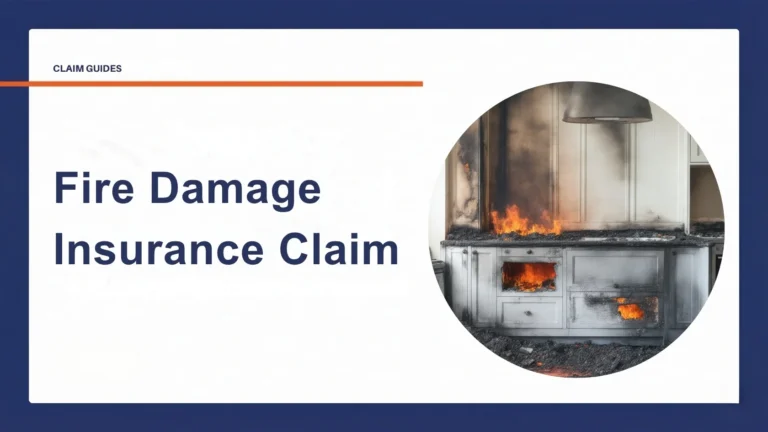
Coming to terms with a house fire is difficult enough without an insurance claim to manage on top of it. Whether the fire was contained to one room or affected the whole property, you are likely dealing with structural damage, smoke and soot that has spread further than the flames ever did, and water damage from the firefighting effort itself. This guide explains what to do first, what your policy should cover, and why fire and smoke damage claims are so often disputed, delayed or underpaid, written for homeowners across the UK, with particular detail for Northern Ireland and Scotland.
Safety comes first, always. Once you and your family are safe, this guide will help you understand the claim ahead of you.
What this guide helps you do
- Take the right steps in the first hours after a fire, for your safety and for your claim
- Understand what your buildings and contents policy should cover, including smoke and soot damage, and what commonly is not covered
- Recognise why fire and smoke damage claims get underestimated, disputed or reduced
- Know what happens during a fire damage claim, from notification through to settlement
First steps after a fire
If there has been a fire at your home, safety comes before insurance.
- Call 999 if the fire is ongoing or you have not yet been told it is safe to re-enter. Do not go back into the property until the fire service confirms it is safe.
- Get the fire service incident number before the crew leaves. This becomes part of your claim evidence, and your insurer is likely to ask for it.
- Photograph and video the damage before any clean-up begins. Capture every affected room, including smoke staining, soot deposits and water damage from firefighting.
- Secure the property. Board up damaged windows, doors and other openings to prevent further damage or unauthorised access, and keep receipts.
- Contact your insurer as soon as you reasonably can. Give the date, a description of what happened and the fire service incident number, and ask for a claim reference.
Once everyone is safe and you have spoken to your insurer, you can talk PCLA through the next steps.
A short call costs nothing and does not commit you to anything.
Key facts homeowners should know first
A fire claim is rarely just fire damage. Most fire claims involve direct fire damage, smoke and soot contamination, and water damage from firefighting. A fair claim accounts for all three.
Smoke and soot damage is easy to underestimate. Smoke travels through cavities, ductwork and voids, and can affect rooms that were never touched by flames.
Cover depends on your specific policy wording. Most UK buildings and contents policies include fire as a standard insured peril, but exclusions, limits and conditions vary between insurers.
Underinsurance is a real risk with fire claims. If your sum insured does not reflect your property rebuild cost, insurers can apply the average clause and reduce your settlement proportionately.
Start here if…
Does home insurance cover fire and smoke damage?
Fire is a standard insured peril under most UK buildings and contents policies, though what is covered, and any conditions attached, depends on your specific policy wording.
Buildings insurance typically covers structural damage to walls, roof timbers and floors, fitted kitchens and bathrooms, smoke contamination requiring specialist remediation, water damage caused by firefighting, debris removal, and temporary boarding and security measures. Contents insurance typically covers furniture, electronics and household goods damaged by fire, smoke or firefighting water, subject to policy limits.
Many policies also cover alternative accommodation if the fire makes your home uninhabitable, and, for landlords, loss of rent while a let property is being repaired.
Coverage statements here are necessarily general. Always check your own policy wording, and if you are unsure, an independent review can clarify your position.
Why smoke and soot damage gets underestimated
This is one of the most common ways a fire claim ends up undervalued, and it is worth understanding even if your fire itself was small.
Smoke moves through a property in ways flames do not. It travels through cavities, ductwork, loft spaces and wall voids, leaving residue and odour in rooms that were never near the fire. Soot is acidic, and left untreated it can continue to damage surfaces, fabrics and electronics over time. Properly remediating smoke damage typically needs specialist equipment, not standard cleaning.
The risk is that a fast, visual assessment prices for cleaning the room where the fire started and misses contamination elsewhere in the property. If your claim only accounts for what is obviously scorched, it is worth asking whether smoke and soot damage in other rooms, cavities and voids has been properly scoped.
Be careful about cleaning smoke damage yourself. Wiping soot with wet cloths or standard cleaning products can smear residue and drive it deeper into porous surfaces. Photograph everything first, and for anything beyond light surface staining, let your insurer know before arranging specialist cleaning.
Where the extent of smoke contamination is disputed, a specialist contamination survey or indoor air quality assessment can evidence residue that is not visible to the eye.
What is not usually covered, and conditions that can affect a claim
Every fire policy carries exclusions and conditions. The ones that catch claimants most often include non-functional smoke alarms, unoccupied properties, negligence or unmaintained systems, intentional acts, undisclosed business use, high-value items without specific listing, and gradual smoke damage from everyday sources such as cigarettes, open fireplaces or poorly vented stoves.
Underinsurance and fire claims
Underinsurance happens when your buildings sum insured does not reflect what it would actually cost to rebuild your property, and a major fire is exactly the scenario where this becomes financially serious.
Where a property is underinsured, insurers can apply what is known as the average clause, paying only the proportion of a claim that matches the proportion of the property that is insured. For more detail, see our guide to underinsurance and fire claims risk for Northern Ireland homeowners.
Fire claims for landlords and businesses
Landlords face the same buildings and contents questions as any homeowner, plus loss of rent while a let property is uninhabitable, and the practical issue of rehousing tenants.
Businesses dealing with a commercial fire claim often face additional complexity: disputed valuations on stock, equipment and fit-out, business interruption alongside the property damage itself, and a settlement that needs to reflect the true cost of getting back to trading.
Homeowners should still expect the claim to account for the full extent of fire, smoke and water damage across the property, alongside contents and, where relevant, alternative accommodation.
Replacement cost versus actual cash value
Replacement cost cover pays the current cost of replacing a damaged item with a new equivalent. Actual cash value pays the replacement cost minus depreciation for the item age and condition, so older items are paid at a fraction of what they would cost to replace today.
Temporary accommodation after a fire
If a fire makes your home uninhabitable, many buildings insurance policies include cover for alternative accommodation while repairs are carried out, or loss of rent for landlords whose tenants need to be rehoused.
What is covered, the daily or weekly limit, and how long it lasts all depend on your policy wording. Keep every receipt for accommodation, storage and associated living costs incurred because the property cannot be lived in.
Loss adjuster or loss assessor: who is acting for you?
Your insurer will usually appoint a loss adjuster to inspect the damage and assess your claim. A loss adjuster working quickly on a fire claim will often focus on what is visible, since they are appointed and paid by the insurer, and report to them.
A loss assessor, such as PCLA, is appointed by you, the homeowner, and acts for you, reviewing the fire, smoke and water damage, gathering evidence, and negotiating the settlement on your behalf. Our guide to loss assessor versus loss adjuster versus broker explains this in more detail.
Why fire damage claims are rejected
A denial or a reduced offer is not always the end of the matter, but it helps to understand why fire claims are commonly challenged:
1. Missing or inadequate documentation. No photographs taken before clean-up, no inventory of damaged contents, no fire service reference.
2. Smoke alarms not functioning. If alarms were absent or inoperable, expect the insurer to raise it.
3. Unoccupied property. Failing to notify the insurer of an extended vacancy before a fire is a common ground for dispute.
4. Late notification. A significant delay between the fire and the claim can become a point of dispute.
5. Non-disclosure of prior damage. Known pre-existing damage or structural issues may be used to challenge the claim.
6. The scope of the assessment undervalues the loss. Smoke contamination in cavities, heat damage to wiring or structural timbers, and water-saturated materials are often underestimated.
A denial, delay or reduced offer is not necessarily final. You can ask for the insurer reasoning in writing, provide further evidence, and seek an independent review before accepting anything.
What happens during a fire damage claim
A fire claim typically moves through several stages:
- Notification. You report the fire to your insurer with the fire service incident number and receive a claim reference.
- Inspection. Your insurer usually appoints a loss adjuster to inspect the property.
- Scoping. The full extent of fire, smoke and water damage is documented.
- Evidence and valuation. Photographs, an inventory and specialist reports are gathered where needed.
- Negotiation. Disagreement over scope or value is worked through with the insurer.
- Settlement. The claim is agreed and funds are released, either as a cash settlement or via insurer-managed repairs.
Timeframes vary depending on the extent of the damage and whether the claim is disputed.
Cash settlement versus insurer-led repairs
Once a fire claim is agreed, you are often given a choice in how it is settled.
Insurer-led repairs
The insurer appoints contractors to carry out reinstatement. Convenient, but with less control over scope, materials and finish.
Cash settlement
You receive a sum and arrange repairs yourself, giving you control, but only if the figure genuinely reflects the full cost of fire, smoke and water damage reinstatement.
The risk with any cash offer after a fire is accepting a figure that looks reasonable on paper but does not cover the real cost once work begins.
An Uddingston fire claim, settled at £56,000
A fire started in the lounge of a property in Uddingston, causing scorch damage to the floors, the fireplace and furniture, and destroying the front window.
Smoke and soot spread well beyond the room of origin, affecting every room in the property. PCLA assessed the full extent of the fire damage alongside the smoke and soot contamination across every affected room, rather than limiting the scope to the lounge itself. The claim was settled for £56,000.
Case details shared with the permission of the policyholder.
Fire damage claims in Northern Ireland and Scotland
Fire claims in Northern Ireland and Scotland follow the same core principles as the rest of the UK, but a few local factors are worth knowing.
- Older housing stock. Older stone, masonry and traditional-build properties can require different reinstatement approaches to modern construction.
- Underinsurance risk. Rebuild-cost underinsurance has been rising across the UK and is worth checking before a claim rather than after one.
- Rural and semi-rural properties. Fire service response times and access can vary more in rural parts of both regions.
PCLA operates in both regions. For Northern Ireland, see our fire damage loss assessor service. For Scotland, see fire damage claims in Scotland.
When independent help is worth it
A loss assessor acts for you, not the insurer. Independent help tends to matter most when:
- Smoke or soot damage has spread beyond the room where the fire started
- The claim involves significant structural, contents or water damage from firefighting
- Underinsurance or the average clause is a possibility
- The proposed settlement does not appear to reflect the true cost of reinstatement
- You are a landlord facing loss of rent, or a business facing interruption alongside property damage
- The claim is delayed, disputed, or denied
Independent help can be brought in at several points, not only right at the start. PCLA can review a claim before you notify your insurer, after a loss adjuster visit, or after an initial offer has been made; a settlement is not final until you have agreed it.
Frequently asked questions about fire damage claims
Does home insurance cover fire damage?
Most UK buildings and contents policies include fire cover, but what is included, any exclusions, and your excess all depend on your specific policy wording.
Is smoke and soot damage covered as part of a fire claim?
Yes, smoke and soot damage is usually covered as part of a fire claim, including damage in rooms that were never touched by flames.
Can my claim be affected if my smoke alarm was not working?
Possibly. Working smoke alarms are a condition of most home insurance policies. If alarms were absent or non-functional, the insurer may dispute the claim.
Will my home insurance pay for somewhere to live while repairs are done?
Many policies include alternative accommodation cover if your home is not habitable after a fire, but limits and timeframes vary.
What is the difference between replacement cost and actual cash value?
Replacement cost pays the current cost of a new equivalent item. Actual cash value pays that figure minus depreciation for age and condition.
What evidence do I need for a fire damage insurance claim?
Photographs and video of every affected room, the fire service incident number, an inventory of damaged contents, and specialist reports for larger claims.
Can I clean up smoke and soot damage myself?
It is usually best not to, beyond making the property safe. Photograph everything first and speak to your insurer before arranging specialist cleaning.
Is gradual smoke damage from a fireplace or cigarettes covered?
Generally not. Smoke and soot damage is typically only covered where it results from a sudden insured event, such as a fire.
What is the difference between a loss adjuster and a loss assessor?
A loss adjuster is appointed and paid by your insurer. A loss assessor, like PCLA, is appointed by you and acts for you.
Should I accept the insurer fire damage settlement?
You do not have to accept an offer immediately. You can ask questions and provide further evidence if you think the fire, smoke or water damage has been underestimated.
Can PCLA help if my fire damage claim has already started?
Yes. PCLA can usually step in after notification, after a loss adjuster visit, or once an offer has been made.
What if my fire damage claim is delayed, disputed or rejected?
Options include requesting clearer timelines, providing further evidence, using your insurer formal complaints process, and, where appropriate, referring the matter to the Financial Ombudsman Service.
Get help with your fire damage claim
If your home has been damaged by fire and you are unsure what your claim involves, an independent loss assessor can review your situation and explain your options. A free initial conversation does not commit you to anything.
Call PCLA
A short call costs nothing and does not commit you to anything.
For how PCLA manages a fire damage claim from start to finish, see our fire damage loss assessor service (Northern Ireland) or fire damage claims in Scotland.
More help on fire and related claims
- Fire damage loss assessor service (Northern Ireland)
- Fire damage claims in Scotland
- Loss assessor versus loss adjuster versus broker
- Commercial fire damage claim: market value dispute
- Comprehensive fire and water damage recovery in Downpatrick
- Underinsurance and fire claims risk for Northern Ireland homeowners
- What are the most common causes of house fires?
- Glossary of insurance terms