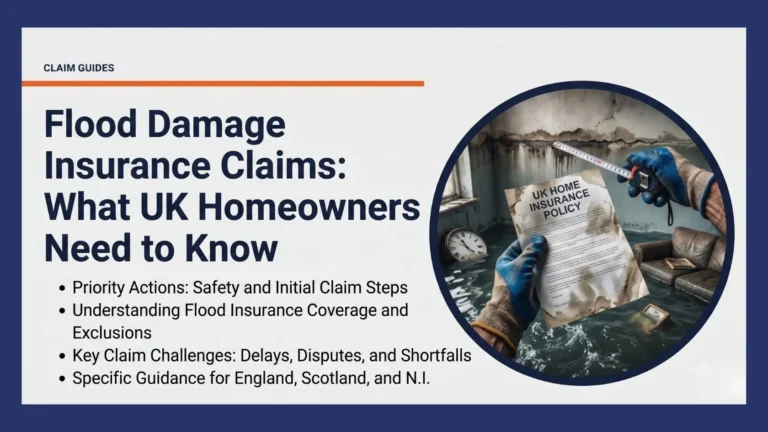
Flood Damage Insurance Claims: What UK Homeowners Need to Know
If your home has been flooded, it’s normal to feel overwhelmed. Alongside the damage to your property, you’ll be dealing with urgent decisions, disruption to daily life, and the uncertainty of making an insurance claim.
This guide explains what to do first, what flood damage home insurance policies typically cover, and where problems can arise during the claims process. It also explains why some flood damage claims are delayed, disputed, or settled for less than homeowners expect, with practical guidance for policyholders across the UK, including Northern Ireland and Scotland.
Your first priority is always the safety of you and your family. Once everyone is safe and any immediate risks have been addressed, the next step is understanding how to protect your claim and begin the recovery process.
Take the right steps in the first 24 to 72 hours to stay safe and protect your claim
Understand what your buildings and contents policy should cover, and what commonly isn’t
Know what happens during a flood damage claim, from notification through to settlement
Recognise why flood claims get disputed, delayed or reduced, and what your options are
First steps: safety before anything else
If your home is flooding or has just flooded, safety comes before insurance.
Follow official safety guidance. If you’ve been told to evacuate, do so. Don’t walk or drive through floodwater — depths and currents are hard to judge, and water can be contaminated.
Turn off gas, electricity and water at the mains if it’s safe to do so. Don’t touch switches or sockets if you’re standing in water or they’re wet.
Treat floodwater as contaminated. It may contain sewage, chemicals or other contaminants. Avoid contact where possible, wash thoroughly afterwards, and keep children and pets away from affected areas.
Photograph and video the damage before any clean-up begins. Capture every affected room, external areas, and any visible tide marks, before anything is moved, cleaned or thrown away.
Contact your PCLA as soon as you reasonably can. Give the date, a description of what happened, and ask our Loss Assessors to report your claim. Don’t throw away damaged items or begin permanent repairs before your insurer has had the chance to inspect. Making the property safe is fine, full reinstatement before the claim is agreed can complicate things.
Once everyone is safe and you’ve spoken to your insurer, you can talk PCLA through the next steps.
A short call costs nothing and doesn’t commit you to anything.
Key facts homeowners should know first
Flooding and escape of water are not the same thing, and your policy usually treats them differently. Flooding is water entering from outside — a river, the sea, surface water after heavy rain, or a sewer overflowing onto the property. Escape of water is a leak from inside your own plumbing or an appliance. If your damage came from an internal leak rather than external flooding, our escape of water claims guide covers that separately.
Cover depends on your specific policy wording. Most UK buildings and contents policies include flood cover, but exclusions, limits and excesses vary between insurers.
Damage is rarely confined to what’s visible. Water can affect subfloors, wall cavities and insulation in ways that aren’t apparent without investigation, and drying can take weeks depending on construction.
The source of the flooding can matter to your claim. Insurers may look at whether water came from a river, the sea, surface water, a sewer, or a drain, and evidence of the source can help avoid disputes later.
Start here if...
- You're not sure whether you can stay in your home. > Is my home habitable?
- You want to know what's covered. > What's covered?
- Your claim has been delayed, reduced or refused. > Disputed claims
- You've been made an offer that feels low. > Cash vs repairs
- You want help managing the claim itself, not just information.
Is my home habitable?
Whether you can safely stay in your home depends on the extent of the damage, contamination, whether essential services (electricity, heating, water) are working, and whether affected areas like kitchens and bathrooms are usable. This is a decision that involves your insurer and, sometimes, your local council — not just insurance strategy.
Many UK buildings insurance policies include cover for alternative accommodation, or loss of rent for landlords, where a home is genuinely uninhabitable. What’s covered, the daily or weekly limit, and how long it lasts all depend on the policy wording — cover is rarely indefinite, and it’s worth checking your policy schedule rather than assuming.
Does home insurance cover flood damage?
Most UK home buildings and contents policies include flood as a standard insured peril, though what’s covered — and any exclusions — depends on your specific policy wording.
Buildings insurance typically covers structural damage: walls, floors, fixed kitchens and bathrooms, and damage that requires drying and reinstatement. Contents insurance typically covers your belongings — furniture, appliances, and personal possessions — subject to policy limits.
Different sources of flooding are sometimes treated differently. Water from a river, the sea, surface water after heavy rain, and water from an overflowing or blocked sewer can all potentially fall under “flood” cover, but insurers may look closely at the source when deciding how a claim is assessed. This is different from escape of water (an internal leak), which usually sits under a separate part of the policy.
Contamination from sewage or agricultural run-off adds a further consideration. Many buildings policies cover the drying and cleaning costs that come with contaminated flood water, though the proposed scope of cleaning and sanitisation can sometimes be disputed.
Coverage statements here are necessarily general — always check your own policy wording, and if you’re unsure, an independent review can clarify your position.
What happens during a flood damage claim
A flood claim typically moves through several stages:
- Notification. You report the flood to your insurer, who opens a claim and gives you a reference number.
- Inspection. Your insurer usually appoints a loss adjuster to inspect the damage and assess the claim on their behalf.
- Emergency works and strip-out. Contaminated or waterlogged materials — flooring, plasterboard, insulation — are often removed to allow the property to dry properly.
- Drying. Specialist equipment and, sometimes, weeks of monitoring bring moisture levels down before reinstatement can safely begin.
- Reinstatement. Repairs, redecoration and refitting bring the property back to its pre-flood condition.
Settlement. The claim is agreed and funds are released, either as a cash settlement or via insurer-managed repairs.
Timeframes vary considerably depending on the extent of the damage, whether the claim is disputed, and how widespread the flooding event was in your area — claims after major regional flooding events often take longer simply due to the volume of claims insurers are handling at once.
Drying, strip-out and hidden damage
Flood damage is rarely just what you can see. Water travels into wall cavities, under floors, and into insulation, and can cause lasting problems if it isn’t properly dried out before reinstatement begins.
Strip-out — removing waterlogged plasterboard, skirting, flooring and insulation — is often necessary even when it looks drastic, because trapped moisture behind intact-looking surfaces leads to damp and mould later. Drying is typically monitored with moisture readings over days or weeks, and the appropriate drying method can differ by construction: older stone or masonry buildings, suspended timber floors, and modern plasterboard-and-insulation construction can all behave differently when wet.
If proposed drying or strip-out works look inadequate for the extent of the damage, PCLA can review the reports and scope independently before reinstatement begins.
Buildings and contents: two parts of the same claim
Where a flood affects both the fabric of your home and your belongings, you may have claims under both the buildings and contents sections of your policy — sometimes with two different insurers if a landlord or leaseholder situation is involved.
Fitted kitchens, floor coverings and fixtures usually sit under buildings cover; furniture, appliances and personal possessions usually sit under contents. Documenting both clearly, with photographs and an inventory, helps avoid gaps between the two.
Temporary accommodation after a flood
If your home isn’t safe or habitable, many buildings insurance policies include cover for alternative accommodation while repairs are carried out — or loss of rent, for landlords with tenants who need to be rehoused.
What’s covered, the daily limit, and how long the cover lasts depend on your policy wording. It isn’t indefinite, and costs beyond the policy limit are generally your responsibility, so it’s worth understanding your entitlement early rather than committing to long-term arrangements before checking.
Loss adjuster or loss assessor — who's acting for you?
Your insurer will usually appoint a loss adjuster to inspect the damage and assess your claim. The loss adjuster is appointed and paid by the insurer, and reports to them.
A loss assessor, such as PCLA, is appointed by you, the homeowner, and acts for you — reviewing the damage, preparing evidence, and negotiating the settlement on your behalf. Both roles are legitimate; the difference is who has appointed them and whose interests they represent. Our guide to loss assessor versus loss adjuster versus broker explains this in more detail.
Why flood claims get disputed, delayed or reduced
If your flood claim has been delayed, reduced or questioned, you’re not alone. Common patterns include:
1. Disputes over the flood source. Insurers may examine whether water genuinely came from an insured external source (river, sea, surface water, sewer) rather than, for example, a gradual internal leak that would sit under a different part of the policy.
2. The claim didn’t capture the full extent of external damage. Gardens, driveways, garages and boundary structures are often part of the same buildings policy but get underestimated in an initial assessment.
3. Hidden or subfloor damage wasn’t properly investigated. Where there’s any doubt about whether water has affected ground beneath patios, driveways or floor structures, this needs to be checked rather than assumed — an assessment that skips this step can understate the claim.
4. The drying or strip-out scope looks insufficient. A scope that treats visible damage as the whole picture, without accounting for cavities, insulation or subfloors, can leave a property at risk of longer-term damp or mould.
5. The settlement offer doesn’t reflect the true cost of reinstatement. This is a dispute rather than a refusal, but it’s common — particularly where hidden damage only becomes apparent once drying and strip-out are underway.
A denial, delay or reduced offer isn’t always final. You can ask for the insurer’s reasoning in writing, provide further evidence, and seek an independent review before accepting anything. If a dispute can’t be resolved directly with your insurer, the Financial Ombudsman Service can review flood damage complaints — PCLA does not provide legal advice, but can help review the evidence, correspondence and scope that sit behind a complaint.
Should I accept the insurer's flood damage settlement?
You don’t have to accept an offer immediately. You can ask questions, request an explanation of how the figure was reached, and provide further evidence if you think the damage or costs have been underestimated.
Cash settlement versus insurer-led repairs
Once a claim is agreed, you’re often given a choice in how it’s settled.
Insurer-led repairs
The insurer appoints contractors to carry out the work — convenient, but with less control over scope, materials and finish.
Cash settlement
You receive a sum and arrange repairs yourself, giving you control, but only if the figure genuinely reflects the full cost of drying, strip-out and reinstatement.
The risk with any cash settlement is accepting a figure that looks reasonable at the point of offer but doesn’t cover the real cost once work begins — particularly with flood damage, where subfloor or structural issues can surface only once investigation takes place. If you’re unsure whether an offer is fair, an independent review before you sign can clarify your position.
What if more damage appears after repairs?
Damp, mould or defects sometimes emerge after a claim has settled and reinstatement is complete. Raising this generally means reporting the new issue to your insurer with fresh evidence — whether it can be linked to the original flood and covered under the existing claim depends on timing, policy wording and the nature of the new damage. It isn’t guaranteed, but it’s worth reviewing rather than assuming it can’t be addressed.
Flood damage claims in Northern Ireland and Scotland
- Coastal and low-lying exposure. Parts of Co. Down and coastal Scotland can be more exposed to flooding from heavy rainfall, high tides or watercourses — a relevant factor in how flooding occurred, not a reason claims are treated differently.
- Public infrastructure. In Northern Ireland, Northern Ireland Water is responsible for the public sewerage network, and the Department for Infrastructure (Rivers) has responsibility for designated watercourses and flood risk. In Scotland, the Scottish Environment Protection Agency (SEPA) publishes flood risk maps and forecasting. Where flooding is linked to public infrastructure, identifying the source matters for the claim, though whether your policy responds depends on its wording.
- Older housing stock. Older stone, masonry and traditional-build properties, common in both regions, can need different drying approaches than modern plasterboard-and-insulation construction.
PCLA operates in both regions. For Northern Ireland, see our flood damage loss assessor service. For Scotland, see flood damage claims in Scotland.
Flood insurance and the future: Flood Re
Homeowners sometimes worry that a flood claim will affect future premiums or their ability to get cover. Previous flooding and flood-risk can influence future terms, but Flood Re is a UK government and insurance-industry backed scheme that helps make flood cover more available and affordable for eligible homes in flood-risk areas. Flood Re operates in England, Scotland and Wales; its position in Northern Ireland has not been independently verified for this guide, so no claim is made here either way. If future cover is a concern, speaking to your insurer or a broker, or checking Flood Re’s own resources, is the right next step — PCLA’s role is helping with your current claim, not future policy placement.
Common policy terms in plain English
Flood. Water entering the property from outside — a river, the sea, surface water, or a sewer or drain overflowing — as distinct from escape of water (an internal leak).
Escape of water. Water leaking from your own pipes, tanks, heating system or appliances. See our escape of water claims guide.
Strip-out. Removing waterlogged or contaminated materials (plasterboard, flooring, insulation) to allow proper drying before reinstatement.
Reinstatement. Returning the property to its pre-flood condition.
Alternative accommodation. Cover for temporary housing costs while a home is uninhabitable following an insured event.
Excess. The amount you pay towards a claim, set out in your policy schedule.
For more, see our full glossary of insurance terms.
When independent help is worth it
A loss assessor acts for you, not the insurer. Independent help tends to matter most when:
- The claim involves significant external, subfloor or structural damage
- The flood source, or whether it counts as an insured event, is being questioned
- The proposed drying or strip-out scope looks insufficient
- The settlement offer doesn’t appear to reflect the true cost of reinstatement
- The claim is delayed, disputed, or you don’t have the time to manage a complex process yourself
Independent help can be brought in at several points — not only right at the start. PCLA can review a claim before you notify your insurer, after a loss adjuster’s visit, or after an initial offer has been made; a settlement isn’t final until you’ve agreed it.
Frequently asked questions about flood damage claims
Tap a question to expand the answer.
Does home insurance cover flood damage?
Most UK buildings and contents policies include flood cover, but what’s included, any exclusions, and your excess all depend on your specific policy wording.
Does insurance cover surface water or flash flooding?
Surface water flooding from heavy rain can be covered as “flood” under many policies, but insurer definitions vary and evidence of external water entering the property can help avoid disputes about the source.
Does insurance cover river or coastal flooding?
Yes, generally, where flood cover is included — subject to policy terms. Flood Re and risk-based pricing may affect availability and cost of cover in high-risk areas, but this doesn’t mean cover is unavailable.
Does home insurance cover sewer flooding and contaminated water?
Damage from a sewer backing up or overflowing may be covered under flood or escape of water sections depending on the policy, and contamination increases the need for proper cleaning, sanitisation and evidence.
Does insurance pay for drying, strip-out and reinstatement?
Often, yes, where the damage falls within the policy terms — though the extent of strip-out and the drying method can be a point of disagreement between homeowners and insurers.
Does insurance pay for temporary accommodation if my home isn't habitable?
Many policies include alternative accommodation or loss-of-rent cover, but limits and timeframes vary — check your policy wording for specifics.
What evidence do I need for a flood damage insurance claim?
Photographs and video of every affected room and external area, tide marks, an inventory of damaged contents, meter readings, and any pre-flood photos you have. For complex or disputed claims, technical reports (moisture readings, structural assessments) can help.
What's the difference between a loss adjuster and a loss assessor?
A loss adjuster is appointed and paid by your insurer to assess the claim on their behalf. A loss assessor, like PCLA, is appointed by you and acts for you.
Should I accept the insurer's flood damage offer?
You don’t have to accept an offer immediately. You can ask questions, request an explanation, and provide further evidence if you think the damage or cost has been underestimated.
Can PCLA help if my flood damage claim has already started?
Yes. PCLA can usually step in after notification, after a loss adjuster’s visit, or once an offer has been made, subject to any existing agreements you may have with another representative.
What if my flood damage claim is delayed, disputed or rejected?
Options include requesting clearer timelines, providing further evidence, using your insurer’s formal complaints process, and, where appropriate, referring the matter to the Financial Ombudsman Service. PCLA doesn’t provide legal advice, but can help review the evidence and correspondence behind a complaint.
Will a flood damage claim affect my future home insurance?
Previous claims and flood risk can influence future premiums and availability of cover, but schemes such as Flood Re exist to support some homeowners in high-risk areas. For future insurance decisions, speak to your insurer or a broker.
Get help with your flood damage claim
If your home has flooded and you’re unsure what your claim involves, an independent loss assessor can review your situation and explain your options — a free initial conversation doesn’t commit you to anything.
Call PCLA
A short call costs nothing and doesn’t commit you to anything.
For how PCLA manages a flood damage claim from start to finish, see our flood damage loss assessor service (Northern Ireland) or flood damage claims in Scotland.